


Page 516 - IJB-10-2
P. 516
International Journal of Bioprinting
                           http://doi.org/10.18063/ijb.XXXXXXXXXXXXX

                           the hydrophilicity assay showed statistically significant differences (* p < 0.05) between controls and
                           NaOH-treated groups at each measuring point (day 0, day 1, day 2, and day 9), with a constant shift of
                           ~9° to 15° observed between conditions. Similarly, statistically significant differences in contact angle
                           within time were separately found in both conditions. Additionally, the contact angle in the controls was
            International Journal of Bioprinting                          Oozing 3D-printed scaffolds for tissue engineering
                           statistically significant ( p < 0.05) between day 0 and day 1, and between day 0 and day 2. However, the
                                           
                     FIG.6 SEM
                           NaOH-treated group showed differences between day 0 and day 2, and between day 0 and day 9 (Figure
                           8).
                                              A                             B


                             Gy

                                                                                0h


                             Gof


                             Oc


                             Or


                             Os


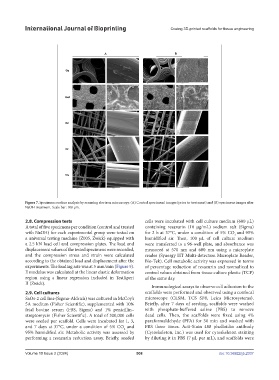
            Figure 7. Specimens surface analysis by scanning electron microscopy. (A) Control specimens’ images (prior to treatment) and (B) specimens images after
                           Figure 7. Specimens surface analysis by scanning electron microscopy. (A) Control specimens’ images
            NaOH treatment. Scale bar: 100 µm.
                           (prior to treatment) and (B) specimens images after NaOH treatment. Scale bar: 100 µm.
            2.8. Compression tests                             cells were incubated with cell culture medium (600 µL)
            A total of five specimens per condition (control and treated   containing resazurin (10 µg/mL) sodium salt (Sigma)


            with NaOH) for each experimental group were tested on      for 2 h at 37°C, under a condition of 5% CO and 95%
                                                                                                     2

            a universal testing machine (Z005, Zwick) equipped with   humidified air. Then, 100 µL of cell culture medium
            a 2.5 kN load cell and compression plates. The load and   were transferred to a 96-well plate, and absorbance was
            displacement values of the tested specimens were recorded,   measured at 570 nm and 600 nm using a microplate
            and the compression stress and strain were calculated   reader (Synergy HT Multi-detection Microplate Reader,
            according to the obtained load and displacement after the   Bio-Tek). Cell metabolic activity was expressed in terms
            experiments. The loading rate was at 5 mm/min (Figure 9).   of percentage reduction of resazurin and normalized to
            E modulus was calculated at the linear elastic deformation   control values obtained from tissue culture plastic (TCP)
            region using a linear  regression included in TestXpert   of the same day.
            II (Zwick).
                                                                  Immunological assays to observe cell adhesion to the
            2.9. Cell cultures                                 scaffolds were performed and observed using a confocal
            SaOs-2 cell line (Sigma-Aldrich) was cultured in McCoy’s   microscope (CLSM, TCS SP8, Leica Microsystems).
            5A medium (Fisher Scientific), supplemented with 10%   Briefly, after 7 days of seeding, scaffolds were washed
            fetal bovine serum (FBS, Sigma) and 1% penicillin–  with phosphate-buffered saline (PBS) to remove
            streptomycin (Fisher Scientific). A total of 300,000 cells   dead cells. Then, the scaffolds were fixed using 4%
            were seeded per scaffold. Cells were incubated for 1, 3,   paraformaldehyde (PFA) for 30 min and washed with
            and 7 days at 37°C, under a condition of 5% CO  and   PBS three times. Acti-Stain 488 phalloidin antibody
                                                      2
            95%  humidified  air.  Metabolic  activity  was  assessed  by   (Cytoskeleton, Inc.) was used for cytoskeleton staining
            performing a resazurin reduction assay. Briefly, seeded   by diluting it in PBS (7 µL per mL), and scaffolds were


            Volume 10 Issue 2 (2024)                       508                                doi: 10.36922/ijb.2337

