


Page 515 - IJB-10-2
P. 515
International Journal of Bioprinting                          Oozing 3D-printed scaffolds for tissue engineering


            Gof, geometries we measured the grid thickness instead of   JEOL) operated at 10 kV. A total of four regions per scaffold
            shred thickness, as they do not possess proper fibers as the   were studied (Figure 7).
            oozing groups (Figure 6).
                                                               2.7. Contact angle assays
            2.5. Effect of sodium hydroxide treatment          Water contact angle was assessed using PLA discs with a
            Scaffolds were submerged in a sodium hydroxide solution   contact angle measuring system (OCA 15, Dataphysics)
            (NaOH, 2 M solution, Sigma-Aldrich) for 15 min at room   using the sessile drop method. For these assays, six PLA
            temperature. Then, the samples were washed for 5 min in   discs (10 mm in diameter and 2 mm in height) were
            distilled water three times.                       3D-printed using the same parameters described above
            2.6. Scaffold surface analysis                     with  a  100%  infill.  A  distilled  water  drop  (3  µL)  was
            The specimens were coated with a gold layer using an agar   generated at 1 µL/s, and photographs were captured for
            sputter coater (AGB 7340, AgarScientific)  and analyzed   posterior analysis using SCA 20 software (Dataphysics)
            with a scanning electron microscope (SEM, JSM 5410,   (Figure 8).


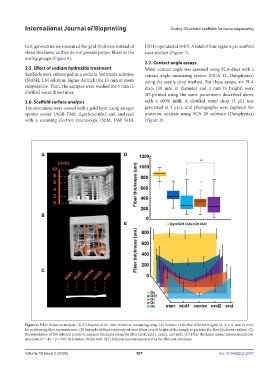
            Figure 6. Fiber thickness analysis. (A–C) Scheme of the fiber thickness measuring setup. (A) Scheme of the five different heights (2, 4, 6, 8, and 10 mm)
            for performing fiber measurements. (B) Example of three randomly selected fibers at each height of the sample to perform the fiber thickness analysis. (C)
            Representation of five selected points to measure thickness along the fiber (start, mid1, center, and end). (D) Fiber thickness means measurements per
            specimen (n = 45, * p < 0.05 by Kruskal–Wallis test). (E) Thickness measurements across the fiber per specimen.


            Volume 10 Issue 2 (2024)                       507                                doi: 10.36922/ijb.2337

