


Page 446 - IJB-10-4
P. 446
International Journal of Bioprinting                                 Improving ductility of 3D-printed Zn–Mg


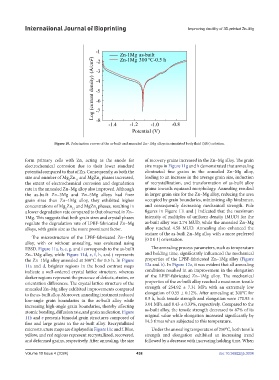
                        Figure 10. Polarization curves of the as-built and annealed Zn–1Mg alloys in simulated body fluid (SBF) solution.


            form primary cells with Zn, acting as the anode for   of recovery grains increased in the Zn–Mg alloy. The grain
            electrochemical corrosion due to their lower standard   size maps in Figure 11g and h demonstrated that annealing
            potential compared to that of Zn. Consequently, as both the   eliminated fine grains in the annealed Zn–Mg alloy,
            size and number of Mg Zn  and MgZn  phases increased,   leading to an increase in the average grain size, induction
                              2
                                           2
                                 11
            the extent of electrochemical corrosion and degradation   of recrystallization, and transformation of as-built alloy
            rate in the annealed Zn–Mg alloy also improved. Although   grains towards equiaxed morphology. Annealing resulted
            the as-built Zn–3Mg and Zn–5Mg alloys had finer    in larger grain size for the Zn–Mg alloy, reducing the area
            grain sizes  than Zn–1Mg alloy, they exhibited higher   occupied by grain boundaries, minimizing slip hindrance,
            concentrations of Mg Zn  and MgZn phases, resulting in   and consequently decreasing mechanical strength. Pole
                             2
                                          2
                                11
            a lower degradation rate compared to that observed in Zn–  figures in Figure 11i and j indicated that the maximum
            1Mg. This suggests that both grain sizes and crystal phases   intensity of multiples of uniform density (MUD) for the
            regulate the degradation rate of LPBF-fabricated Zn–Mg   as-built alloy was 2.74 MUD, while the annealed Zn–Mg
            alloys, with grain size as the more prominent factor.  alloy reached 4.58 MUD. Annealing also enhanced the
                                                               texture of the as-built Zn–Mg alloy with a more preferred
               The microstructure of the LPBF-fabricated Zn–1Mg   {0 0 0 1} orientation.
            alloy, with or without annealing, was evaluated using
            EBSD. Figure 11a, b, c, g, and i corresponds to the as-built   The annealing process parameters, such as temperature
            Zn–1Mg alloy, while Figure 11d, e, f, h, and j represents   and holding time, significantly influenced the mechanical
            the Zn–1Mg alloy annealed at 300°C for 0.5 h. In Figure   properties of the LPBF-fabricated Zn–1Mg alloy (Figure
            11a  and  d, brighter regions in the bond contrast maps   12a and b). In Figure 12a, it was evident that all annealing
            indicate a well-ordered crystal lattice structure, whereas   conditions resulted in an improvement in the elongation
            darker regions represent the presence of defects, strains, or   of the LPBF-fabricated Zn–1Mg alloy. The mechanical
            orientation differences. The crystal lattice structure of the   properties of the as-built alloy reached a maximum tensile
            annealed Zn–Mg alloy exhibited improvements compared   strength of 254.92 ± 7.31 MPa with an extremely low
            to the as-built alloy. Moreover, annealing treatment reduced   elongation of 0.55 ± 0.12%. After annealing at 300°C for
            low-angle grain boundaries in the as-built alloy while   0.5 h, both tensile strength and elongation were 170.93 ±
            increasing high-angle grain boundaries, thereby affecting   3.01 MPa and 8.43 ± 0.33%, respectively. Compared to the
            atomic bonding, diffusion rate, and grain nucleation. Figure   as-built alloy, the tensile strength decreased to 67% of its
            11b and e presents bimodal grain structures composed of   original value while elongation increased significantly by
            fine and large grains in the as-built alloy. Recrystallized   14.3 times when subjected to this temperature.
            microstructure maps are displayed in Figure 11c and f. Blue,   Under the annealing temperature of 250°C, both tensile
            yellow, and red regions represent recrystallized, recovered,   strength and elongation exhibited an increasing trend
            and deformed grains, respectively. After annealing, the size   followed by a decrease with increasing holding time. When

            Volume 10 Issue 4 (2024)                       438                                doi: 10.36922/ijb.3034

