


Page 55 - IJB-5-2
P. 55
Shuai C, et al.

                         A                       B                        C


                         D                       E                        F


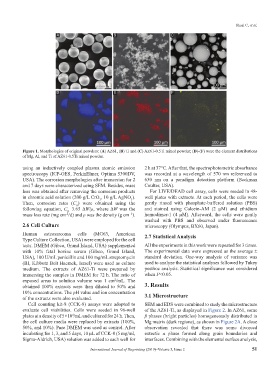
           Figure 1. Morphologies of original powders: (A) AZ61, (B) Ti and (C) AZ61-0.5Ti mixed powder; (D)-(F) were the element distributions
           of Mg, Al, and Ti of AZ61-0.5Ti mixed powder.

           using an inductively coupled plasma atomic  emission   2 h at 37°C. After that, the spectrophotometric absorbance
           spectroscopy (ICP-OES, PerkinElmer, Optima 5300DV,   was recorded at a wavelength of 570 nm referenced to
           USA). The corrosion morphologies after immersion for 2   630  nm on a paradigm  detection  platform  (Beckman
           and 7 days were characterized using SEM. Besides, mass   Coulter, USA).
           loss was obtained after removing the corrosion products   For LIVE/DEAD cell assay, cells were seeded in 48-
           in chromic acid solution (200 g/L CrO , 10 g/L AgNO ).   well plates with extracts. At each period, the cells were
                                           3
                                                         3
           Then,  corrosion rates  (C ) were  obtained  using the   gently  rinsed with phosphate-buffered solution  (PBS)
                                 R
           following equation, C =3.65 ∆W/ρ, where ∆W was the   and stained using Calcein-AM (2 µM)  and ethidium
                              R
           mass loss rate (mg cm /d) and ρ was the density (g cm ).  homodimer-1 (4 µM). Afterward, the cells were gently
                                                        −3
                             -2
                                                               washed  with  PBS  and  observed  under  fluorescence
           2.6 Cell Culture                                    microscopy (Olympus, BX60, Japan).
           Human    osteosarcoma  cells  (MG63,   American     2.7 Statistical Analysis
           Type Culture Collection, USA) were employed for the cell
           tests. DMEM (Gibco, Grand Island, USA) supplemented   All the experiments in this work were repeated for 3 times.
           with 10% fetal bovine serum (Gibco, Grand Island,   The experimental data were expressed as the average ±
           USA), 100 U/mL penicillin and 100 mg/mL streptomycin   standard  deviation.  One-way analysis  of variance  was
           (BI, Kibbutz Beit Haemek, Israel) were used as culture   used to analyze the statistical analyses followed by Tukey
           medium.  The extracts of  AZ61-Ti were prepared by   posthoc analysis. Statistical significance was considered
           immersing the samples in DMEM for 72 h. The ratio of   when P<0.05.
           exposed  areas  to  solution  volume  was 1  cm /mL. The
                                                  2
           obtained  100% extracts  were then  diluted  to 50% and   3. Results
           10% concentrations. The pH value and ion concentration   3.1 Microstructure
           of the extracts were also evaluated.
             Cell counting kit-8 (CCK-8) assays were adopted to   SEM and EDS were combined to study the microstructure
           evaluate  cell viabilities.  Cells were seeded in 96-well   of the AZ61-Ti, as displayed in Figure 2. In AZ61, some
           plates at a density of 5×10 /mL and cultured for 24 h. Then,   β phases (bright particles) homogeneously distributed in
                                4
           the cell culture media were replaced by extracts (100%,   Mg matrix (dark regions), as shown in Figure 2A. A close
           50%, and 10%). Pure DMEM was used as control. After   observation revealed  that there was some divorced
           incubating for 1, 3, and 5 days, 10 µL of CCK-8 (5 mg/ml,   eutectic  α phase formed along grain boundaries and
           Sigma-Aldrich, USA) solution was added to each well for   interfaces. Combining with the elemental surface analysis,

                                       International Journal of Bioprinting (2019)–Volume 5, Issue 2        51

