


Page 78 - IJB-10-5
P. 78
International Journal of Bioprinting                            dECM bioink for 3D musculoskeletal tissue reg.


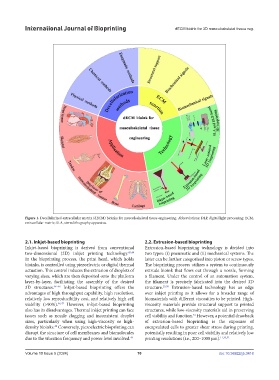
            Figure 1. Decellularized extracellular matrix (dECM) bioinks for musculoskeletal tissue engineering. Abbreviations: DLP, digital light processing; ECM,
            extracellular matrix; SLA, stereolithography apparatus.


            2.1. Inkjet-based bioprinting                      2.2. Extrusion-based bioprinting
            Inkjet-based bioprinting is derived from conventional   Extrusion-based  bioprinting  technology  is  divided  into
            two-dimensional  (2D)  inkjet  printing  technology. 43,44    two types: (i) pneumatic and (ii) mechanical systems. The
            In the bioprinting process, the print head, which holds   latter can be further categorized into piston or screw types.
            bioinks, is controlled using piezoelectric or digital thermal   The bioprinting process utilizes a system to continuously
            actuation. This control induces the extrusion of droplets of   extrude bioink that flows out through a nozzle, forming
            varying sizes, which are then deposited onto the platform   a filament. Under the control of an automation system,
            layer-by-layer, facilitating  the  assembly of  the  desired   the filament is precisely fabricated into the desired 3D
            3D  structures. 44–46  Inkjet-based bioprinting  offers  the   structure. 29,50  Extrusion-based technology has an edge
            advantages of high throughput capability, high resolution,   over inkjet printing as it allows for a broader range of
            relatively low reproducibility cost, and relatively high cell   biomaterials with different viscosities to be printed. High-
            viability (>90%). 46,47  However, inkjet-based bioprinting   viscosity materials provide structural support to printed
            also has its disadvantages. Thermal inkjet printing can face   structures, while low-viscosity materials aid in preserving
            issues such as nozzle clogging and inconsistent droplet   cell viability and function.  However, a potential drawback
                                                                                   51
            sizes, particularly when using high-viscosity or high-  of extrusion-based bioprinting is the exposure of
            density bioinks.  Conversely, piezoelectric bioprinting can   encapsulated cells to greater shear stress during printing,
                        48
            disrupt the structure of cell membranes and biomolecules   potentially resulting in poor cell viability and relatively low
                                                         49
            due to the vibration frequency and power level involved.    printing resolutions (i.e., 200–1000 μm). 11,20,52

            Volume 10 Issue 5 (2024)                        70                                doi: 10.36922/ijb.3418

