


Page 117 - IJB-6-4
P. 117
Matsugaki, et al.
                         A


                         B


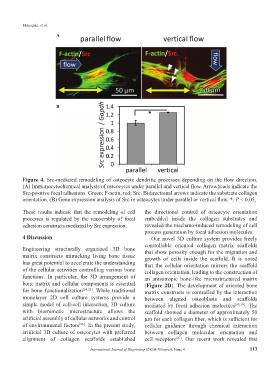
           Figure 4. Src-mediated remodeling of osteocyte dendritic processes depending on the flow direction.
           (A) Immunocytochemical analysis of osteocytes under parallel and vertical flow. Arrowheads indicate the
           Src-positive focal adhesions. Green; F-actin, red; Src. Bidirectional arrows indicate the substrate collagen
           orientation. (B) Gene expression analysis of Src in osteocytes under parallel or vertical flow. *: P < 0.05.

           These results indicate that the remodeling of cell   the directional  control of osteocyte  orientation
           processes is regulated by the reassembly of focal   embedded  inside  the  collagen  substrates  and
           adhesion constructs mediated by Src expression.     revealed the mechano-induced remodeling of cell
                                                               process generation by focal adhesion molecules.
           4 Discussion                                          Our novel 3D culture  system provides freely
                                                               controllable  oriented  collagen  matrix  scaffolds
           Engineering  structurally  organized  3D bone       that show porosity enough for the migration and
           matrix  constructs  mimicking  living  bone tissue   growth  of  cells  inside  the  scaffold.  It  is  noted
           has great potential to accelerate the understanding   that  the  cellular  orientation  mirrors  the  scaffold
           of the cellular activities controlling various bone   collagen orientation, leading to the construction of
           functions.  In particular, the  3D arrangement  of   an  anisotropic  bone-like  microstructured  matrix
           bone matrix and cellular components is essential    (Figure 2D). The development of oriented bone
           for bone functionalization [24,25] . While traditional   matrix constructs is controlled by the interaction
           monolayer 2D cell culture systems provide a         between  aligned  osteoblasts  and  scaffolds
           simple model of cell-cell interaction, 3D culture   mediated  by focal  adhesion molecules [18,19] . The
           with biomimetic  microstructure  allows the         scaffold showed a diameter of approximately 50
           artificial assembly of cellular networks and control   µm for each collagen fiber, which is sufficient for
           of environmental factors . In the present study,    cellular  guidance through chemical  interaction
                                   [26]
           artificial 3D culture of osteocytes with preferred   between  collagen  molecular  orientation  and
           alignment  of  collagen  scaffolds  established     cell  receptors . Our recent work revealed  that
                                                                            [27]
                                       International Journal of Bioprinting (2020)–Volume 6, Issue 4       113

