


Page 89 - IJB-7-1
P. 89
Xie, et al.
           A                                                 B


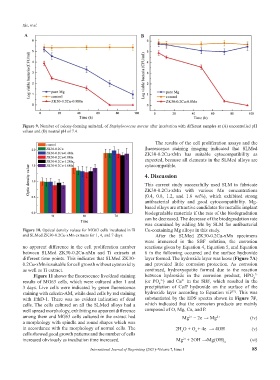
           Figure 9. Number of colony-forming units/mL of Staphylococcus aureus after incubation with different samples at (A) uncontrolled pH
           values and (B) neutral pH of 7.4.

                                                                   The results of the cell proliferation assays and the
                                                               fluorescence  staining  imaging  indicated  that  SLMed
                                                               ZK30-0.2Cu-xMn has suitable cytocompatibility  as
                                                               expected, because all elements in the SLMed alloys are
                                                               cytocompatible.

                                                               4. Discussion
                                                               This current study successfully used SLM  to fabricate
                                                               ZK30-0.2Cu-xMn with various Mn concentrations
                                                               (0.4,  0.8,  1.2, and  1.6  wt%), which  exhibited  strong
                                                               antibacterial  ability  and  good cytocompatibility. Mg-
                                                               based alloys are attractive candidates for metallic implant
                                                               biodegradable materials if the rate of the biodegradation
                                                               can be decreased. The decrease of the biodegradation rate
                                                               was examined by adding Mn by SLM for antibacterial
           Figure 10. Optical density values for MG63 cells incubated in Ti   Cu-containing Mg alloys in this study.
           and SLMed ZK30-0.2Cu-xMn extracts for 1, 4, and 7 days.  After  the  SLMed  ZK30-0.2Cu-xMn specimens
                                                               were  immersed  in  the  SBF  solution,  the  corrosion
           no apparent  difference  in the  cell  proliferation  number   reactions given by Equation 4, Equation 5, and Equation
           between SLMed ZK30-0.2Cu-xMn and  Ti extracts  at   6 in the following  occurred  and the surface hydroxide
           different time points. This indicates that SLMed ZK30-  layer formed. The hydroxide layer was loose (Figure 7A)
           0.2Cu-xMn is suitable for cell growth without cytotoxicity   and provided little  corrosion protection.  As  corrosion
           as well as Ti extract.                              continued,  hydroxyapatite  formed  due to the reaction
                                                                                                             2-
               Figure 11 shows the fluorescence live/dead staining   between  hydroxide  in  the  corrosion  product,  HPO
                                                                                                             4
                                                                              2+
           results of MG63 cells, which were cultured after 1 and   (or PO ) and Ca   in  the  SBF,  which  resulted  in  the
                                                                     3-
                                                                     4
           3 days. Live cells were indicated by green fluorescence   precipitation  of Ca/P hydroxide on the surface of the
                                                                                                   [32]
           staining with calcein-AM, while dead cells by red staining   hydroxide layer according to Equation vii . This  was
           with EthD-1.  There was no evident indication of dead   substantiated by the EDS spectra shown in Figure 7F,
           cells. The cells cultured on all the SLMed alloys had a   which indicated that the corrosion products are mainly
           well spread morphology, exhibiting no apparent difference   composed of O, Mg, Ca, and P.
           among them and MG63 cells cultured in the extract had               Mg  − 2e → Mg 2+            (iv)
                                                                                 2+
                                                                                       −
           a morphology with spindle and round shapes which was
           in accordance with the morphology of normal cells. The           2H O + O + 4e  → 4OH −          (v)
                                                                                         −
           cells showed good growth patterns and the number of cells          2     2
           increased obviously as incubation time increased.                Mg + 2OH →Mg(OH)    2          (vi)
                                                                               2+
                                                                                      −
                                       International Journal of Bioprinting (2021)–Volume 7, Issue 1        85

