


Page 98 - IJB-8-2
P. 98
3D-printed Stent Coated with Dipyridamole-loaded Nanofiber
                        A                                        B


                                                                 D
                        C


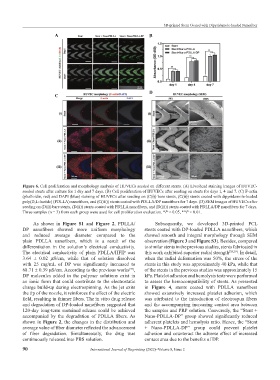
           Figure 6. Cell proliferation and morphology analysis of HUVECs seeded on different stents. (A) Live/dead staining images of HUVEC-
           seeded stents after culture for 1 day and 7 days. (B) Cell proliferation of HUVECs after seeding on stents for days 1, 4 and 7. (C) F-actin
           (phalloidin, red) and DAPI (blue) staining of HUVECs after seeding on (C(i)) bare stents, (C(ii)) stents coated with dipyridamole-loaded
           poly(D,L-lactide) (PDLLA) nanofibers, and (C(iii)) stents coated with PDLLA/DP nanofibers for 7 days. (D) SEM images of HUVECs after
           seeding on (D(i)) bare stents, (D(ii)) stents coated with PDLLA nanofibers, and (D(iii)) stents coated with PDLLA/DP nanofibers for 7 days.
           Three samples (n = 3) from each group were used for cell proliferation evaluation. *P < 0.05, **P < 0.01.
               As  shown  in  Figure  S1 and  Figure  2,  PDLLA/   Subsequently,  we  developed  3D-printed  PCL
           DP  nanofibers  showed  more  uniform  morphology   stents coated with DP-loaded PDLLA nanofibers, which
           and  reduced  average  diameter  compared  to  the   showed smooth and integral morphology through SEM
           plain  PDLLA  nanofibers,  which  is  a  result  of  the   observation (Figure 3 and Figure S3). Besides, compared
           differentiation  in  the  solution’s  electrical  conductivity.   to similar stents in the previous studies, stents fabricated in
           The  electrical  conductivity  of  plain  PDLLA/HFIP  was   this work exhibited superior radial strength [38,39] . In detail,
           3.64  ±  0.02  μS/cm,  while  that  of  solution  dissolved   when the radial deformation was 50%, the stress of the
           with  25  mg/mL  of  DP  was  significantly  increased  to   stents in this study was approximately 40 kPa, while that
           68.71 ± 0.39 μS/cm. According to the previous works ,   of the stents in the previous studies was approximately 15
                                                        [37]
           DP  molecules  added  in  the  polymer  solutions  exist  in   kPa. Platelet adhesion and hemolysis tests were performed
           an  ionic  form  that  could  contribute  to  the  electrostatic   to assess the hemocompatibility of stents. As presented
           charge build-up during electrospinning. As the jet exits   in  Figure  4,  stents  coated  with  PDLLA  nanofibers
           the tip of the nozzle, it reinforces the effect of the electric   showed  extensively  increased  platelet  adhesion,  which
           field, resulting in thinner fibers. The in vitro drug release   was  attributed  to  the  introduction  of  electrospun  fibers
           and degradation of DP-loaded nanofibers suggested that   and the accompanying increasing contact area between
           120-day long-term sustained release could be achieved   the samples and PRP solution. Conversely, the “Stent +
           accompanied  by  the  degradation  of  PDLLA  fibers. As   Nano-PDLLA-DP” group showed significantly reduced
           shown in Figure 2, the changes in the distribution and   adherent platelets and hemolysis ratio. Hence, the “Stent
           average value of fiber diameter reflected the advancement   +  Nano-PDLLA-DP”  group  could  prevent  platelet
           of  fiber  degradation.  Simultaneously,  the  drug  was   adhesion and counteract the adverse effect of increased
           continuously released into PBS solution.            contact area due to the benefits of DP.

           90                          International Journal of Bioprinting (2022)–Volume 8, Issue 2

