


Page 63 - IJB-9-1
P. 63
International Journal of Bioprinting                     In situ defect detection and feedback control with P-OCT


            2.4.3. Defects around the turnarounds and feedback   in ROI3, ROI4, ROI5, and ROI6 represented the adjusted
            mech                                               nodes added at 0.5 mm, 1 mm, 1.5 mm, and 2 mm in front
            In addition to the straight path and end points    (or behind) of the corner node, respectively. At the same
            mentioned above, material deposition errors often occur   time, the speed of yellow path was increased from 11 mm/s
            at turnarounds. There is a velocity change around the   to 12 mm/s. The analysis of FS and LT values in four areas
            turnarounds, which leads to material deposition errors   ROI3-6 is shown in Figure 6F, and the average FS values in
            when the velocity does not match the pressure and   ROI1-6 were 0.531 ± 0.073 mm, 0.483 ± 0.021 mm, 0.475
            rheological properties of the material. Armstrong et al.   ± 0.022 mm, 0.471 ± 0.028 mm, 0.443 ± 0.036 mm, and
            corrected the path error using reverse compensation [18] .   0.430 ± 0.040 mm, respectively. The average LT values in
            This  section  mainly  focuses  on  compensating  for  FS   ROI1-6 were 0.378 ± 0.052 mm, 0.333 ± 0.021 mm, 0.333
            and LT defects around the turnarounds with feedback   ± 0.050 mm, 0.313 ± 0.056 mm, 0.298 ± 0.0489 mm, and
            control for the common right-angle corner path     0.288 ± 0.035mm, respectively. The result indicated that
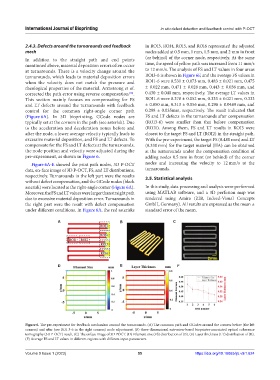
            (Figure 6A). In 3D bioprinting, GCode nodes are    FS and LT defects in the turnarounds after compensation
            typically set at the corners in the path (see asterisk). Due   (ROI3-6)  were  smaller  than  that before  compensation
            to the acceleration and deceleration zones before and   (ROI1). Among them, FS and LT results in ROI3 were
            after the node, a lower average velocity typically leads to   closest to the target FS and LT (ROI2) in the straight path.
            excessive material deposition, and FS and LT defects. To   With the pre-experiment, the target FS (0.480 mm) and LT
            compensate for the FS and LT defects at the turnarounds,   (0.330 mm) for the target material (HA) can be obtained
            the node position and velocity were adjusted during the   at the turnarounds under the compensation condition of
            pre-experiment, as shown in Figure 6.              adding nodes 0.5 mm in front (or behind) of the corner
              Figure 6A-E showed the print path nodes, 3D P-OCT   nodes and increasing the velocity to 12 mm/s at the
            data, en-face image of 3D P-OCT, FS, and LT distributions,   turnarounds.
            respectively. Turnarounds in the left part were the results   2.5. Statistical analysis
            without defect compensation, and the GCode nodes (black
            asterisk) were located at the right-angle corner (Figure 6A).   In this study, data processing and analysis were performed
            Moreover, the FS and LT values were larger than straight path   using MATLAB software, and a 3D perfusion map was
            due to excessive material deposition error. Turnarounds in   rendered using Amira (ZIB, Indeed-Visual Concepts
            the right part were the result with defect compensation   GmbH, Germany). All results are expressed as the mean ±
            under different conditions. In Figure 6A, the red asterisks   standard error of the mean.

                          A                         B                      C


                          D                         E                       F


            Figure 6. The pre-experiment for feedback mechanism around the turnarounds. (A) The common path and GCodes around the corners before (the left
            corners) and after (see ROI 3-6 in the right corners) node adjustment. (B) three-dimensional extrusion-based bioprinter-associated optical coherence
            tomography (3D P-OCT) result. (C) The enface image of 3D POCT. (D) Filament size (FS) distribution of (B). (E) Layer thickness (LT) distribution of (B).
            (F) Average FS and LT values in different regions with different input parameters.


            Volume 9 Issue 1 (2023)                         55                      https://doi.org/10.18063/ijb.v9i1.624

