


Page 122 - IJB-9-2
P. 122
International Journal of Bioprinting                          Photocurable pullulan-based bioink for 3D printing


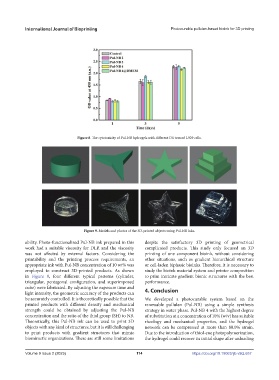
                                  Figure 8. The cytotoxicity of Pul-NB hydrogels with different DS toward L929 cells.


                                     Figure 9. Models and photos of the 3D-printed objects using Pul-NB inks.

            ability. Photo-functionalized Pul-NB ink prepared in this   despite the satisfactory 3D printing of geometrical
            work had a suitable viscosity for DLP, and the viscosity   complicated products. This study only focused on 3D
            was not affected by external factors. Considering the   printing of one component bioink, without considering
            printability and  the  printing  process  requirements,  an   other situations, such as gradient hierarchical structure
            appropriate ink with Pul-NB concentration of 10 wt% was   or cell-laden biphasic bioinks. Therefore, it is necessary to
            employed to  construct 3D-printed  products.  As  shown   study the bioink material system and printer composition
            in  Figure 9, four different typical patterns (cylinder,   to print intricate gradient bionic structures with the best
            triangular, pentagonal configuration, and superimposed   performance.
            cube) were fabricated. By adjusting the exposure time and
            light intensity, the geometric accuracy of the products can   4. Conclusion
            be accurately controlled. It is theoretically possible that the   We developed a photocurable system based on the
            printed products with different density and mechanical   renewable pullulan (Pul-NB) using a simple synthesis
            strength could be obtained by adjusting the Pul-NB   strategy in water phase. Pul-NB 4 with the highest degree
            concentration and the ratio of the thiol group (SH) to NB.   of substitution at a concentration of 10% (w/v) has suitable
            Theoretically, this Pul-NB ink can be used to print 3D   rheology and  mechanical properties,  and  the hydrogel
            objects with any kind of structures, but it is still challenging   network can be compressed at more than 80.0% strain.
            to print products with gradient structures that mimic   Due to the introduction of thiol-ene photopolymerization,
            biomimetic organizations. There are still some limitations   the hydrogel could recover its initial shape after unloading


            Volume 9 Issue 2 (2023)                        114                     https://doi.org/10.18063/ijb.v9i2.657

