


Page 390 - IJB-9-2
P. 390
International Journal of Bioprinting                               In situ 3D bioprinter for skin wound healing


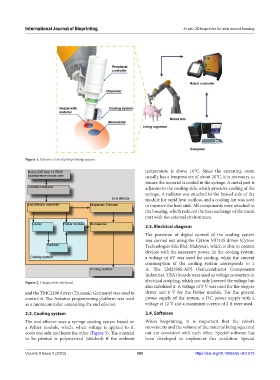
            Figure 1. Scheme of in situ bioprinting system.

                                                               temperature is above 10°C. Since the operating room
                                                               usually has a temperature of about 20°C, it is necessary to
                                                               ensure the material is cooled in the syringe. A metal part is
                                                               adjacent to the cooling side, which provides cooling of the
                                                               syringe. A radiator was attached to the heated side of the
                                                               module for rapid heat outflow, and a cooling fan was used
                                                               to improve the heat sink. All components were attached to
                                                               the housing, which reduced the heat exchange of the metal
                                                               part with the external environment.
                                                               2.3. Electrical diagram

                                                               The provision of digital control of the cooling system
                                                               was carried out using the Cytron MD13S driver (Cytron
                                                               Technologies Sdn Bhd, Malaysia), which is able to control
                                                               devices with the necessary power. In the cooling system,
                                                               a voltage of 6V was used for cooling, while the current
                                                               consumption of the cooling system corresponds to 1
                                                               A. The LM2596S-ADJ (Semiconductor Components
                                                               Industries, USA) boards were used as voltage converters in
            Figure 2. Design of in situ head.                  electrical coupling, which not only lowered the voltage but
                                                               also stabilized it. A voltage of 9 V was used for the stepper
            and the TMC2100 driver (Trinamic, Germany) was used to   driver and 6 V for the Peltier module. For the general
            control it. The Arduino programming platform was used   power supply of the system, a DC power supply with a
            as a microcontroller controlling the end effector.  voltage of 12 V and a maximum current of 2 A were used.
            2.2. Cooling system                                2.4. Software

            The end effector uses a syringe cooling system based on   When bioprinting, it is important that the robot’s
            a Peltier module, which, when  voltage is applied to  it,   movements and the volume of the material being squeezed
            cools one side and heats the other (Figure 3). The material   out are consistent with each other. Special software has
            to be printed is polymerized (stitched) if the ambient   been developed to implement this condition. Special


            Volume 9 Issue 2 (2023)                        382                      https://doi.org/10.18063/ijb.v9i2.675

