


Page 411 - IJB-9-2
P. 411
International Journal of Bioprinting                   3D-printed skin substitute accelerates wound healing in vivo


                         A


                         B


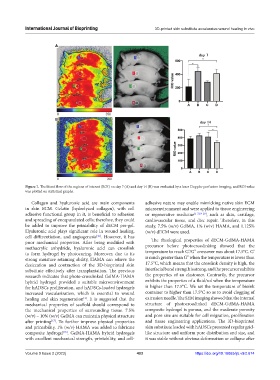
            Figure 7. The blood flow of the regions of interest (ROI) on day 7 (A) and day 14 (B) was evaluated by a laser Doppler perfusion imaging, and ROI value
            was plotted on statistical graphs.

              Collagen and hyaluronic acid are main components   adhesive nature may enable mimicking native skin ECM
            in skin ECM. Gelatin (hydrolyzed collagen), with cell   microenvironment and were applied to tissue engineering
            adhesive functional group in it, is beneficial to adhesion   or regenerative medicine [1-7,19-20] , such as skin, cartilage,
            and spreading of encapusulated cells; therefore, they could   cardiovascular tissue, and disc repair. Therefore, in this
            be added to improve the printability of dECM pre-gel.   study, 7.5% (w/v) GelMA, 1% (w/v) HAMA, and 1.125%
            Hyaluronic acid plays significant role in wound healing,   (w/v) dECM were used.
                                          [16]
            cell differentiation, and angiogenesis . However, it has
            poor mechanical properties. After being modified with   The rheological properties of dECM-GelMA-HAMA
            methacrylic anhydride, hyaluronic acid can crosslink   precursor  before  photocrosslinking  showed  that  the
            to form hydrogel by photocuring. Moreover, due to its   temperature to reach G’/G’’ crossover was about 17.5°C. G’
            strong moisture retaining ability, HAMA can relieve the   is much greater than G’’ when the temperature is lower than
            desiccation and contraction of the 3D-bioprinted skin   17.5°C, which means that the crosslink density is high, the
            substitute effectively after transplantation. The previous   interfacial bond strength is strong, and the precursor exhibits
            research indicates that photo-crosslinked GelMA-HAMA   the properties of an elastomer. Contrarily, the precursor
            hybrid hydrogel provided a suitable microenvironment   exhibits the properties of a fluid/sol when the temperature
            for hADSCs proliferation, and hADSCs-loaded hydrogels   is higher than 17.5°C. We set the temperature of bioink
            increased vascularization, which is essential to wound   container to higher than 17.5°C so as to avoid clogging of
            healing and skin regeneration . It is suggested that the   extrusion needle. The SEM imaging showed that the internal
                                     [1]
            mechanical properties of scaffold should correspond to   structure of photocrosslinked dECM-GelMA-HAMA
            the mechanical properties of surrounding tissue. 7.5%   composite hydrogel is porous, and the moderate porosity
            (w/v) – 10% (w/v) GelMA can maintain physical structure   and pore size are suitable for cell migration, proliferation
            after printing . To further improve physical properties   and tissue engineering applications. The 3D-bioprinted
                       [17]
            and printability, 1% (w/v) HAMA was added to fabricate   skin substitute loaded with hADSCs presented regular grid-
            composite hydrogel . GelMA-HAMA hybrid hydrogels   like structure and uniform pore distribution and size, and
                            [18]
            with excellent mechanical strength, printability, and cell-  it was stable without obvious deformation or collapse after

            Volume 9 Issue 2 (2023)                        403                      https://doi.org/10.18063/ijb.v9i2.674

