


Page 419 - IJB-9-4
P. 419
International Journal of Bioprinting                                  3D bioprinting of artificial blood vessel


            A                                     B


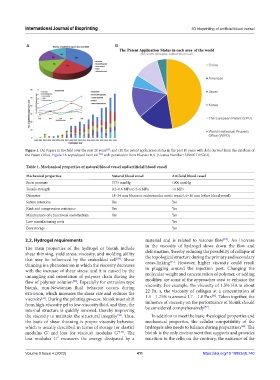
            Figure 1. (A) Papers in the field over the past 20 years ; and (B) the patent application status in the past 10 years with data derived from the database of
                                              [23]
            the Patent Office. Figure 1A reproduced from ref.  with permission from Elsevier B.V. (License Number: 5398071195762).
                                           [23]
            Table 1. Mechanical properties of natural blood vessel and artificial blood vessel
            Mechanical properties                Natural blood vessel     Artificial blood vessel
            Burst pressure                       3775 mmHg                1000 mmHg
            Tensile strength                     0.2–0.6 MPa to 2–6 MPa   >1 MPa
            Diameter                             18–24 mm (thoracic endovascular aortic repair); 6–10 mm (other blood vessel)
            Suture retention                     Yes                      Yes
            Kink and compression resistance      Yes                      Yes
            Maintenance of a functional endothelium  Yes                  Yes
            Low manufacturing costs                                       Yes
            Easy storage                                                  Yes

                                                                                                [34]
            2.2. Hydrogel requirements                         material and is related to viscous flow . An increase
            The main properties of the hydrogel or bioink include   in the viscosity of hydrogel slows down the flow and
            shear thinning, yield stress, viscosity, and molding ability   deformation, thereby reducing the possibility of collapse of
            that  may be  influenced  by the  embedded cell .  Shear   the topological structure during the primary and secondary
                                                  [29]
                                                                         [35]
            thinning is a phenomenon in which the viscosity decreases   cross-linking .  However,  higher  viscosity  could  result
            with the increase of shear stress, and it is caused by the   in  plugging  around  the  injection  port.  Changing  the
            untangling and orientation of polymer chain during the   molecular weight and concentration of polymer, or adding
            flow of polymer solution . Especially for extrusion type   modifier, are some of the approaches used to enhance the
                                [30]
            bioink,  non-Newtonian  fluid  behavior  occurs  during   viscosity. For example, the viscosity of 1.5% HA is about
            extrusion, which increases the shear rate and reduces the   22 Pa. s, the viscosity of collagen at a concentration of
                                                                                           [36]
            viscosity . During the printing process, bioink must shift   1.5 – 1.75% is around 1.7 – 1.8 Pa·s . Taken together, the
                   [31]
            from high-viscosity gel to low-viscosity fluid, and then, the   influence of viscosity on the performance of bioink should
                                                                                        [37]
            internal structure is quickly renewed, thereby improving   be considered comprehensively .
            the viscosity to maintain the structural integrity . Thus,   In addition to meet the basic rheological properties and
                                                   [32]
            the basic of shear thinning is proper viscosity behavior,   mechanical properties, the cellular compatibility of the
                                                                                                       [38]
            which is usually described in terms of storage (or elastic)   hydrogels also needs to balance during preparation . The
            modulus G’ and loss (or viscous) modulus G” . The   bioink is the only environment that supports and provides
                                                    [33]
            loss modulus G” measures the energy dissipated by a   nutrition to the cells; on the contrary, the existence of the
            Volume 9 Issue 4 (2023)                        411                         https://doi.org/10.18063/ijb.740

