


Page 421 - IJB-9-4
P. 421
International Journal of Bioprinting                                  3D bioprinting of artificial blood vessel


                         A                                   B


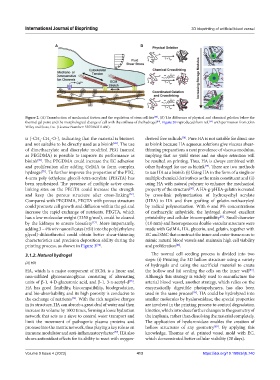
            Figure 2. (A) Transduction of mechanical factors and the regulation of stem cell fate . (B) The difference of physical and chemical gelation below the
                                                                   [60]
            thermal gel point and the morphological change of cell with the stiffness of the hydrogel . Figure 2B reproduced from ref.   with permission from John
                                                                    [61]
                                                                                          [61]
            Wiley and Sons, Inc. (License Number: 5355060311460).
            is (-CH -CH -O-), indicating that the material is bioinert   derived free radicals . Pure HA is not suitable for direct use
                                                                              [78]
                  2
                      2
            and not suitable to be directly used as a bioink . The use   as bioink because HA aqueous solutions give viscous shear-
                                                 [69]
            of dimethacrylate and diacrylate modified PEG (named   thinning preparations a neat prevalence of viscous modulus,
            as PEGDMA) is possible to improve its performance as   implying that no yield stress and no shape retention will
            bioink . The PEGDMA could increase the EC adhesion   be resulted on printing. Thus, HA is always combined with
                 [70]
                                                                                        [79]
            and proliferation after adding GelMA to form complex   other hydrogel for use as bioink . There are two methods
                   [71]
            hydrogel . To further improve the properties of the PEG,   to use HA as a bioink: (i) Using HA in the form of a single or
            4-arm poly (ethylene glycol)-tetra-acrylate (PEGTA) has   multiple chemical derivatives as the main constituent and (ii)
            been synthesized. The presence of multiple active cross-  using HA with natural polymer to enhance the mechanical
            linking sites on the PEGTA could increase the strength   property of the structure . A HA-g-pHEA-gelatin is created
                                                                                  [80]
            and keep the porous structure after cross-linking .   by cross-link polymerization of hydroxyethyl acrylate
                                                        [72]
            Compared with PEGDMA, PEGTA with porous structure   (HEA) to HA and then grafting of gelatin-methacryloyl
            could promote cell growth and diffusion within the gel and   by radical polymerization. With 6 and 8% concentrations
            increase the rapid exchange of nutrients. PEGTA, which   of methacrylic anhydride, the hydrogel showed excellent
            has a low molecular weight (3350 g/mol), could be cleared   printability and cellular biocompatibility . Small-diameter
                                                                                              [81]
            by the kidneys to ensure biosafety . More importantly,   (4.0 mm) and heterogeneous double vascular structure were
                                        [73]
            adding 3 – 4% w/v nanosilicates (nSi) into the poly(ethylene   made with GelMA, HA, glycerin, and gelatin, together with
            glycol)-dithiothreitol could obtain better shear-thinning   EC and SMC that construct the inner and outer tissue so as to
            characteristics and precision deposition ability during the   mimic natural blood vessels and maintain high cell viability
            printing process, as shown in Figure 3 .           and proliferation .
                                          [74]
                                                                            [82]
            3.1.2. Natural hydrogel                              The normal cell seeding process is divided into two
                                                               steps: (i) Printing the 3D hollow structure using a variety
            (A) HA                                             of hydrogels and using the sacrificial material to create
            HA, which is a major component of ECM, is a linear and   the hollow and (ii) seeding the cells on the inner wall .
                                                                                                           [83]
            non-sulfated glycosaminoglycan  consisting of alternating   Although this strategy is widely used to manufacture the
            units of β-1, 4-D-glucuronic acid, and β-1, 3-n-acetyl-d .   arterial blood vessel, another strategy, which relies on the
                                                        [75]
            HA has good flexibility, biocompatibility, biodegradation,   enzymatically digestible photopolymers, has also been
            and bio-absorbability, and its high porosity is conducive to   used in the same process . HA could be hydrolyzed into
                                                                                   [84]
            the exchange of nutrients . With the rich negative charges   smaller molecules by hyaluronidase; the special properties
                                [76]
            in its structure, HA can absorb a great deal of water and then   are involved in the printing process to control degradation
            increase its volume by 1000 times, forming a loose hydration   kinetics, which introduce further changes to the geometry of
            network that acts as a sieve to control water transport and   the implants, rather than dissolving the material completely.
            limit the movement of pathogenic plasma proteins and   The application of hyaluronidase enables the creation of
            protease into the matrix network, thus playing a key role as an   hollow structures of any geometry . By applying this
                                                                                            [85]
            immune modulator and anti-inflammatory factor . HA also   knowledge, Thomas  et al. printed vessel mold with EC,
                                                 [77]
            shows antioxidant effects for its ability to react with oxygen-  which demonstrated better cellular viability (28 days).

            Volume 9 Issue 4 (2023)                        413                         https://doi.org/10.18063/ijb.740

