


Page 422 - IJB-9-4
P. 422
International Journal of Bioprinting                                  3D bioprinting of artificial blood vessel


                         A                                  B


                               C


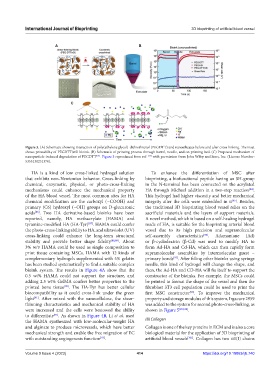
            Figure 3. (A) Schematic showing interaction of poly(ethylene glycol)-dithiothreitol (PEGDTT) and nanosilicates before and after cross-linking. The inset
            shows printability of PEGDTT/nSi bioink. (B) Schematic of printing process through barrel, needle, and on printing bed. (C) Proposed mechanism of
            nanoparticle-induced degradation of PEGDTT . Figure 3 reproduced from ref.  [74]  with permission from John Wiley and Sons, Inc. (License Number:
                                          [74]
            5355130231370).
              HA is a kind of low cross-linked hydrogel solution   To enhance the differentiation of MSC after
            that exhibits non-Newtonian behavior. Cross-linking by   bioprinting, a biofunctional peptide having an SH-group
            chemical, enzymatic, physical, or photo-cross-linking   in the N-terminal has been connected on the acrylated
            mechanisms could enhance the mechanical property   HA through Michael addition in a two-step reaction .
                                                                                                           [94]
            of the HA blood vessel. The most common sites for HA   This hydrogel had higher viscosity and better mechanical
            chemical modification are the carboxyl (−COOH) and   integrity after the cells were embedded in it . Besides,
                                                                                                    [95]
            primary (C6) hydroxyl (−OH) groups on D-glucuronic   the traditional 3D bioprinting blood vessel relies on the
            acids . Two HA derivative-based bioinks have been   sacrificial materials and the layers of support materials.
                [86]
            reported, namely, HA methacrylate (HAMA) and       A novel method, which is based on a self-healing hydrogel
            tyramine-modified HA (HA-Tyr) . HAMA could confer   made of HA, is suitable for the bioprinting arterial blood
                                       [87]
            the photo-cross-linking ability to HA, and ultraviolet (UV)   vessel due to its high precision and supramolecular
            cross-linking could enhance the long-term structural   self-assembly  characteristics .  Adamantane  (Ad)
                                                                                        [96]
            stability and provide better shape fidelity [88,89] . About   or  β-cyclodextrin (β-Cd) was used to modify HA to
            3% w/v HAMA could be used as single composition to   form Ad-HA and Cd-HA, which can then rapidly form
            print tissue containing MSCs. HAMA with 12 kinds of   supramolecular assemblies by intermolecular guest –
            complementary hydrogels supplemented with 5% gelatin   primary bonds . After filling other bioinks using syringe
                                                                           [97]
            has been studied systematically to find a suitable complex   needle, this kind of hydrogel will change the shape, and
            bioink system. The results in  Figure  4A show that the   then, the Ad-HA and CD-HA will fix itself to support the
            0.5 wt% HAMA could not support the structure, and   constructor of the bioinks. For example, the MSCs could
            adding 2.5 wt% GelMA confers better properties to the   be printed to format the shape of the vessel and then the
                            [90]
            printed bone tissue . The HA-Tyr has better cellular   fibroblast 3T3 cell population could be used to print the
            biocompatibility as it could cross-link under the green   first MSC constructor . To improve the mechanical
                                                                                  [98]
            light . After mixed with the nanocellulose, the shear-  property and storage modulus of this system, Irgacure 2959
               [91]
            thinning characteristics and mechanical stability of HA   was added to the system for second photo-cross-linking, as
            were increased and the cells were bestowed the ability   shown in Figure 5 [99,100] .
            to differentiate . As shown in Figure 4B, Li et al. used
                        [92]
            the HAMA synthesized with low-molecular-weight HA   (B) Collagen
            and alginate to produce microvessels, which have better   Collagen is one of the key proteins in ECM and is also a core
            mechanical strength and enable the free migration of EC   biological material for the application of 3D bioprinting of
            with outstanding angiogenesis function .           artificial blood vessels [101] . Collagen has two α1(I) chains
                                            [93]

            Volume 9 Issue 4 (2023)                        414                         https://doi.org/10.18063/ijb.740

