


Page 287 - IJB-9-5
P. 287
International Journal of Bioprinting                              Blood components for tissue graft bioprinting


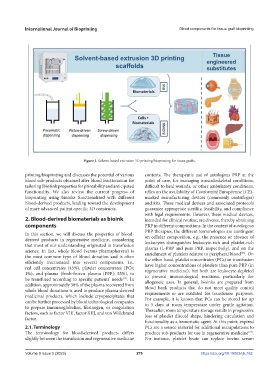
                                     Figure 1. Solvent-based extrusion 3D printing/bioprinting for tissue grafts.


            printing/bioprinting and discusses the potential of various   contexts. The therapeutic use of autologous PRP at the
            blood sub-products obtained after blood fractionation for   point of care, for managing musculoskeletal conditions,
            tailoring (bio)ink properties for printability and anticipated   difficult to heal wounds, or other ambulatory conditions,
            functionality. We also review the current progress of   relies on the availability of Conformité Européenne (CE)-
            bioprinting using bioinks functionalized with different   marked manufacturing  devices (commonly centrifuges)
            blood-derived products, leading toward the development   and kits. These medical devices and associated protocols
            of more advanced patient-specific 3D constructs.   guarantee appropriate sterility, feasibility, and compliance
                                                               with legal requirements. However, these medical devices,
            2. Blood-derived biomaterials as bioink            intended for clinical routine, are diverse, thereby obtaining
            components                                         PRP in different compositions. In the context of autologous
                                                               PRP therapies, the different terminologies are contingent
            In  this  section,  we  will  discuss  the  properties  of  blood-  on cellular composition, e.g., the presence or absence of
            derived products in regenerative medicine, considering   leukocytes distinguishes leukocyte-rich and platelet-rich
            that most of our understanding originated in transfusion   plasma (L-PRP and pure PRP, respectively), and on the
            science. In fact, whole blood (versus plasmapheresis) is   enrichment of platelets relative to peripheral blood . On
                                                                                                        [23]
            the  most  common  type  of  blood  donation  and  is  often   the other hand, platelet concentrates (PCs) in transfusion
            efficiently fractionated into several components, i.e.,   have higher concentrations of platelets than pure PRP (in
            red cell concentrates (45%), platelet concentrates (PCs;   regenerative medicine), but both are leukocyte-depleted
            1%), and plasma (fresh-frozen plasma [FFP]; 55%), to   to prevent immunological reactions, particularly for
            be transfused according to specific patients’ needs . In   allogeneic uses. In general, bioinks are prepared from
                                                     [22]
            addition, approximately 30% of the plasma recovered from   blood bank products that do not meet quality control
            whole blood donations is used to produce plasma-derived   requirements or are outdated for transfusion purposes.
            medicinal  products,  which  include  cryoprecipitates  that   For example, it is known that PCs can be stored for up
            can be further processed by blood technological companies   to 5 days at room temperature under gentle agitation.
            to prepare immunoglobulins, fibrinogen, or coagulation   Thereafter, room temperature storage results in progressive
            factors, such as factor VIII, factor XIII, and von Willebrand   loss of platelet discoid shape, hindering circulation and
            factor.
                                                               functionality as a hemostatic agent. At this point, expired
            2.1. Terminology                                   PCs are a source material for additional manipulations to
            The terminology for blood-derived products differs   produce sub-products for use in regenerative medicine .
                                                                                                           [24]
            slightly between the transfusion and regenerative medicine   For instance, platelet lysate can replace bovine serum

            Volume 9 Issue 5 (2023)                        279                         https://doi.org/10.18063/ijb.762

