


Page 288 - IJB-9-5
P. 288
International Journal of Bioprinting                              Blood components for tissue graft bioprinting


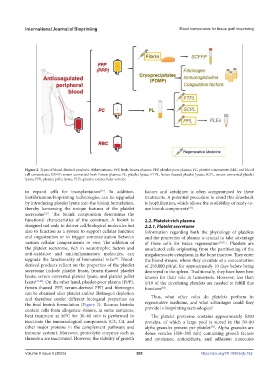
            Figure 2. Types of blood-derived products. Abbreviations: FFP, fresh-frozen plasma; PPP, platelet-poor plasma; PC, platelet concentrate; RBC, red blood
            cell concentrate; SDFFP, serum-converted fresh-frozen plasma; PL, platelet lysate; FTPL, frozen thawed platelet lysate; SCPL, serum-converted platelet
            lysate; PPL, platelet pellet lysate; PLEv, platelet extracellular vesicles.

                                            [24]
            to expand cells for transplantation . In addition,   factors and cytokines is often compromised by these
            biofabrication/bioprinting technologies  can be  upgraded   treatments. A potential procedure to avoid this drawback
            by introducing platelet lysate into the bioink formulation,   is lyophilization, which allows the availability of ready-to-
                                                                                 [29]
            thereby harnessing the unique features of the platelet   use bioink components .
                    [25]
            secretome . The bioink composition determines the
            functional characteristics of the construct. A bioink is   2.2. Platelet-rich plasma
            designed not only to deliver cell/biological molecules but   2.2.1. Platelet secretome
            also to function as a system to support cellular function   Information regarding both the physiology of platelets
            and organization  or to  trigger  communication  between   and the properties of plasma is crucial to take advantage
            various cellular compartments  in vivo. The addition of   of these cells for tissue regeneration [30,31] . Platelets are
            the platelet secretome, rich in neurotrophic factors and   anucleated  cells  originating  from  the  partitioning  of  the
            anti-oxidative and anti-inflammatory molecules, can   megakaryocyte cytoplasm in the bone marrow. They enter
                                                 [26]
            upgrade the functionality of biomaterial inks . Blood-  the blood stream, where they circulate at a concentration
            derived products reliant on the properties of the platelet   of 250,000 plt/µL for approximately 10 days before being
            secretome  include  platelet  lysate,  frozen-thawed  platelet   destroyed in the spleen. Traditionally, they have been best
            lysate, serum-converted platelet lysate, and platelet pellet   known for their role in hemostasis. However, less than
            lysate [27,28] . On the other hand, platelet-poor plasma (PPP),   1/10 of the circulating platelets are needed to fulfill this
            frozen-thawed PPP, serum-derived PPP, and fibrinogen   function .
                                                                      [24]
            can be obtained after platelet and/or fibrinogen depletion
            and  therefore confer different biological  properties  on   Thus, what other roles do platelets perform in
            the final bioink formulation (Figure 2). Because bioinks   regenerative medicine, and what advantages could they
            contain  cells  from  allogeneic  donors,  in  some  instances,   provide in bioprinting technologies?
            heat treatment at 56°C for 30–60 min is performed to   The platelet proteome contains approximately 5200
            inactivate the  immunological  components (C3,  C4,  and   proteins,  of  which  a  large  pool  is  stored  in  the  50–80
            other major proteins in the complement pathways and   alpha granules present per platelet . Alpha granules are
                                                                                           [32]
            immune system). Moreover, proteolytic enzymes such as   dense vesicles (200–500 nm) containing growth factors
            thrombin are inactivated. However, the stability of growth   and  cytokines,  antioxidants,  and  adhesion  molecules


            Volume 9 Issue 5 (2023)                        280                         https://doi.org/10.18063/ijb.762

