


Page 405 - IJB-9-5
P. 405
International Journal of Bioprinting                A sturgeon cartilage extracellular matrix-derived bioactive bioink


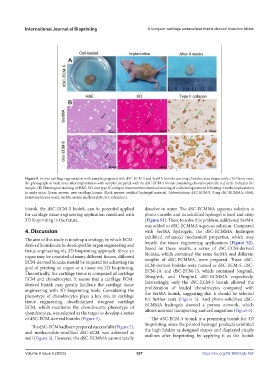
            Figure 9. In vivo cartilage regeneration with samples prepared with dSC-ECM-5 and SerMA bioinks carrying chondrocytes, respectively. (A) Gross view;
            the photograph of nude mice after implantation with samples prepared with the dSC-ECM-5 bioink containing chondrocytes; the red circle indicates the
            sample. (B) Histological staining of H&E, SO, and type II collagen immunohistochemical staining of collected specimens following 4 weeks implantation
            in nude mice. Green arrows: new cartilage lacuna. Black arrows: residual hydrogel material. Abbreviations: dSC-ECM-5, 5 mg dSC-ECMMA; H&E,
            hematoxylin and eosin; SerMa, sericin methacrylate; SO, safranin-O.

            bioink, the dSC-ECM-5 bioink, can be potential applied   dissolve in water. The dSC-ECMMA aqueous solution is
            for cartilage tissue engineering application combined with   photo-curable, and its solidified hydrogel is hard and crisp
            3D bioprinting in the future.                      (Figure S1). Then, to solve this problem, additional SerMA
                                                               was added to dSC-ECMMA aqueous solution. Compared
            4. Discussion                                      with SerMA hydrogels, the dSC-ECMMA  hydrogels
                                                               exhibited enhanced mechanical properties, which may
            The aim of this study is to set up a strategy, by which ECM-
            derived bioinks can be developed for organ engineering and   benefit  the  tissue  engineering  applications  (Figure S2).
            tissue engineering via 3D bioprinting approach. Since an   Based on these results, a series of dSC-ECM-derived
            organ may be consisted of many different tissues, different   bioinks, which contained the same SerMA and different
            ECM-derived bioinks should be required for achieving the   weights of  dSC-ECMMA,  were  prepared. These  dSC-
            goal of printing an organ or a tissue via 3D bioprinting.   ECM-derived bioinks were named as dSC-ECM-5, dSC-
            Theoretically, the cartilage tissue is composed of cartilage   ECM-10, and dSC-ECM-15, which contained 5mg/mL,
            ECM and chondrocytes. It seems that a cartilage ECM-  10mg/mL, and 15mg/mL dSC-ECMMA respectively.
            derived bioink may greatly facilitate the cartilage tissue   Interestingly, only the dSC-ECM-5 bioink allowed the
            engineering  with 3D  bioprinting  tools.  Considering the   proliferation of loaded chondrocytes compared with
            phenotype of chondrocytes plays a key role in cartilage   the SerMA bioink, suggesting that it should be selected
            tissue engineering, decellularized sturgeon cartilage   for further tests (Figure 5). And photo-solidified dSC-
            ECM,  which  maintains  the  chondrocytic  phenotype of   ECMMA  hydrogels  showed  a  porous  network,  which
            chondrocytes, was selected as the target to develop a series   allows nutrient transporting and cell migration (Figure 6).
            of dSC-ECM-derived bioinks (Figure 1).                The dSC-ECM-5 bioink is a promising bioink for 3D
                                                               bioprinting, since the printed hydrogel products exhibited
               The dSC-ECM had been prepared successfully (Figure 2),
            and methacrylate-modified dSC-ECM was achieved as   the high fidelity as designed shapes and displayed clearly
                                                               outlines  after  bioprinting by  applying  it  as  the  bioink
            well (Figure 3). However, the dSC-ECMMA cannot totally

            Volume 9 Issue 5 (2023)                        397                          https://doi.org/10.18063/ijb.768

