


Page 65 - IJB-9-5
P. 65
International Journal of Bioprinting                        3D-printed PLA-BG composite induces angiogenesis


            Table 1. Primer sequences
             Gene             Forward primer (5′ to 3′)              Reverse primer (5′ to 3′)
             GAPDH            CGA CCA CTT TGT CAA GCT CA             AGG GGA GAT TCA TGT TGG TG
             CD31             CAT TGG CGT GTT GGG AAG AA             GCT CAT GTT TGC CTA GCT CC
             KDR              TTA CTT GCA GGG GAC AGA GG             TTC CCG GTA GAA GCA CTT GT


                                                               BXFM, OLYMPUS DEUTSCHLAND GmbH, Hamburg,
                                                               Germany). The analysis of the vascular density was carried
                                                               out using ImageJ .
                                                                            [33]
                                                               2.9. Statistical analysis
                                                               Statistical analyses were performed using the software
                                                               GraphPad Prism. The results are presented as medians and
                                                               quartiles. Measurements  were carried out  in triplicates.
                                                               Cell-based experiments were independently repeated three
                                                               times. Normally distributed data were analyzed by one-
                                                               way analysis of variance (ANOVA). Depending on Levene’s
                                                               test for equality of variances, pairwise comparisons were
                                                               conducted either by a Tukey–HSD or Games–Howell
                                                               post hoc test. In contrast, non-normally distributed data
                                                               were evaluated with the Kruskal–Wallis test followed
                                                               by  a  Bonferroni-corrected  Conover–Iman  analysis.  For
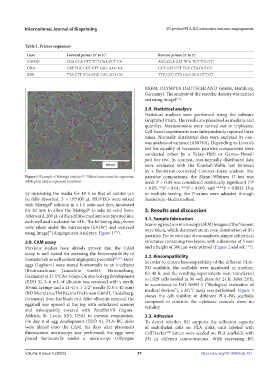
            Figure 1. Example of Matrigel analysis . Yellow lanes show the segments,   pairwise comparisons,  the  Mann–Whitney  U test was
                                    [33]
            while pink circles represent junctions.            used. P < 0.05 was considered statistically significant (*P
                                                               < 0.05, **P < 0.01, ***P < 0.005, and ****P < 0.001). Due
            by incubating the media for 48 h so that all solutes can   to multiple testing, the  P-values were adjusted through
            be fully absorbed. 5 × 10 /100 µL HUVECs were mixed   Bonferroni–Holm method.
                                 4
            with Matrigel® solution in a 1:1 ratio and then incubated
            for 30 min to allow the Matrigel® to take its solid form.   3. Results and discussion
            Afterward, 200 µL of the additive medium was pipetted into   3.1. Sample fabrication
            each well and incubated for 24 h. The following day, photos   Scanning electron microscopy (SEM) images of the filament
            were taken under the microscope (EVOS®) and analyzed   were taken, which demonstrate an even distribution of BG
            using ImageJ® (Angiogenesis Analyzer; Figure 1 ).
                                                  [33]
                                                               particles. For in vitro and in ovo analyses, simple cylindrical
            2.8. CAM assay                                     structures containing two layers, with a diameter of 5 mm
                                                                                                          [17]
            Previous  studies  have  already  proven  that  the  CAM   and a height of 300 µm were printed (Figure 2 and ref.  ).
            assay  is well suited for  assessing the biocompatibility of   3.2. Biocompatibility
            biomaterials as well as their angiogenic potential [34,35] . Hens’   In order to ensure biocompatibility of the different PLA–
            eggs (Leghorn) were stored horizontally in an incubator   BG scaffolds, the scaffolds were incubated in medium
            (Brutmaschinen  Janeschitz  GmbH,  Hammelburg,     for 48 h, and the resulting supernatants were transferred
            Germany) at 37.5°C for 3 days. On day 3 of egg development   to L929 cells seeded in 96-well plate for 24 h. After 24 h,
            (EDD 3), 5–6 mL of albumin was removed with a sterile   in accordance to ISO-10993-5 (“Biological evaluation of
            10-mL syringe and a 21-G × 1-1/2″ needle (0.8 × 40 mm)   medical devices”), a MTT assay was performed. Figure 3
            (BD MicrolanceTM Becton Dickinson GmbH, Heidelberg,   shows the cell viability in different PLA–BG scaffolds
            Germany) from the blunt end. After albumin removal, the   compared  to  controls;  the  cytotoxic  controls  show  no
            eggshell was opened at the top with autoclaved scissors   viability.
            and subsequently covered with ParafilmVR (Sigma-
            Aldrich, St. Louis, MO, USA) to prevent evaporation.   3.3. Adhesion
            On day 8 of egg development (EDD  8), PLA–BG disks   To detect whether BG supports the adhesion capacity
            were placed onto the CAM. Six days after placement   of endothelial cells on PLA disks, cells labeled with
            fluorescence microscopy was performed, the eggs were   CellTracker  Green were seeded on PLA scaffolds with
                                                                        TM
            placed horizontally under a microscope (Olympus    BG in different concentrations. With increasing BG

            Volume 9 Issue 5 (2023)                         57                         https://doi.org/10.18063/ijb.751

