


Page 124 - IJB-9-6
P. 124
International Journal of Bioprinting                                   Exosome-based bioink for bioprinting


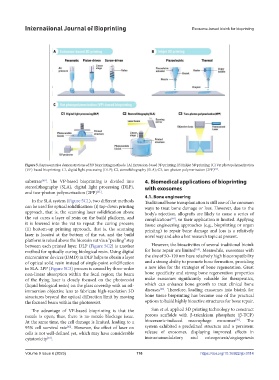
            Figure 5. Representative demonstrations of 3D bioprinting methods. (A) Extrusion-based 3D printing; (B) Inkjet 3D printing; (C) Vat photopolymerization
            (VP)-based bioprinting: C1, digital light processing (DLP); C2, stereolithography (SLA); C3, two-photon polymerization (2PP) .
                                                                                             [61]
                   [60]
            substrate . The VP-based bioprinting is divided into   4. Biomedical applications of bioprinting
            stereolithography (SLA), digital light processing (DLP),   with exosomes
                                          [61]
            and two-photon polymerization (2PP) .
                                                               4.1. Bone engineering
               In the SLA system (Figure 5C1), two different methods   Traditional bone transplantation is still one of the common
            can be used for optical solidification: (i) top-down printing   ways to treat bone damage or loss. However, due to the
            approach, that is, the scanning laser solidification above   body’s  rejection,  allografts  are  likely  to  cause  a  series  of
            the vat cures a layer of resin on the build platform, and   complications , so their application is limited. Applying
                                                                          [64]
            it is lowered into the vat to repeat the curing process;   tissue engineering approaches (e.g., bioprinting or organ
            (ii)  bottom-up printing  approach, that is, the scanning   printing) to repair bone damage and loss is a relatively
            laser  is located at  the bottom of the vat, and the build   novel way and also a hot research topic at present.
            platform is raised above the bioresin vat via a “peeling” step
            between each printed layer. DLP (Figure 5C2) is another   However, the bioactivities of several traditional bioink
                                                                                    [65]
            method for optically curing biological resin. Using digital   for bone repair are limited . Meanwhile, exosomes with
            micromirror devices (DMD) in DLP helps to obtain a layer   the size of 50–120 nm have relatively high biocompatibility
            of optical solid resin instead of single-point solidification   and a strong ability to promote bone formation, providing
            in SLA. 2PP (Figure 5C3) process is caused by three-order   a new idea for the strategies of bone regeneration. Great
            non-linear absorption within the focal region; the beam   bone specificity and strong bone regeneration properties
            of the flying laser is closely focused on the photoresist   make exosomes significantly valuable for therapeutics,
            (liquid biological resin) on the glass coverslip with an oil-  which can enhance bone growth to treat clinical bone
                                                                     [66]
            immersion objective lens to fabricate high-resolution 3D   diseases . Therefore, loading exosomes into bioink for
            structures beyond the optical diffraction limit by moving   bone  tissue  bioprinting  has  become  one  of  the practical
            the focused beam within the photoresist.           options to build highly bioactive structures for bone repair.
               The  advantage  of  VP-based  bioprinting  is  that  the   Sun et al. applied 3D printing technology to construct
            nozzle is open; thus, there is no nozzle blockage issue.   porous scaffolds with β-tricalcium phosphate (β-TCP)
                                                                                                     [36]
            At the same time, the cell damage is limited, leading to a   bioceramic-induced  macrophage  exosomes .  The
            95% cell survival rate . However, the effect of laser on   system exhibited a predefined structure and a persistent
                              [62]
            cells is not well-defined yet, which may have considerable   release of exosomes, displaying improved effects in
            cytotoxicity .                                     immunomodulatory   and    osteogenesis/angiogenesis
                     [63]

            Volume 9 Issue 6 (2023)                        116                         https://doi.org/10.36922/ijb.0114

