


Page 128 - IJB-9-6
P. 128
International Journal of Bioprinting                                   Exosome-based bioink for bioprinting


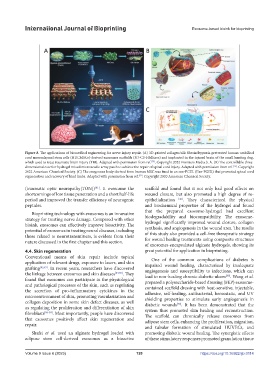
            Figure 8. The applications of biomedical engineering for nerve injury repair. (A) 3D-printed collagen/silk fibroin/hypoxia-pretreated human umbilical
            cord mesenchymal stem cells (HUCMSCs)-derived exosomes scaffolds (3D-CS-HMExos) and implanted in the injured brain of the small hunting dog,
            which used to treat traumatic brain injury (TBI). Adapted with permission from ref. . Copyright 2022 Frontiers Media S. A. (B) The controllable three-
                                                                  [75]
            dimensional exterior hydrogel mixed microneedle array patch to achieve the repair of spinal cord injury. Adapted with permission from ref. . Copyright
                                                                                                    [76]
            2022 American Chemical Society. (C) The exogenous body derived from human MSC was fixed in an exo-PGEL (Exo-PGEL) that promoted spinal cord
            regeneration and recovery of hind limbs. Adapted with permission from ref. . Copyright 2020 American Chemical Society.
                                                            [77]
            (traumatic  optic  neuropathy[TON]) .  It  overcame  the   scaffold and found that it not only had good effects on
                                          [81]
            shortcomings of low tissue penetration and a short half-life   wound closure, but also promoted a high degree of re-
            period and improved the transfer efficiency of neurogenic   epithelialization   [46] . They characterized the physical
            peptides.                                          and biochemical properties of the hydrogel and found
               Bioprinting technology with exosomes is an innovative   that the prepared exosome-hydrogel had excellent
            strategy for treating nerve damage. Compared with other   biodegradability  and  biocompatibility. The  exosome-
            bioink, exosomes can effectively improve bioactivity. The   hydrogel significantly improved wound closure, collagen
            potential of exosomes in treating neural diseases, including   synthesis, and angiogenesis in the wound area. The results
            those related to neurotransmitters, is evident from their   of this study also provided a cell-free therapeutic strategy
            nature discussed in the first chapter and this section.  for wound healing treatments using composite structures
                                                               of exosomes-encapsulated alginate hydrogels, showing its
            4.4. Skin regeneration                             great potential for application in bioprinting.
            Conventional means of skin repair include topical     One of the common complications of diabetes is
            application of relevant drugs, exposure to lasers, and skin   impaired wound healing, characterized by inadequate
            grafting [82,83] . In recent years, researchers have discovered   angiogenesis and susceptibility to infections, which can
            the linkage between exosomes and skin diseases [84,85] . They   lead to non-healing chronic diabetic ulcers . Wang et al.
                                                                                                 [89]
            found that exosomes can participate in the physiological   prepared a polysaccharide-based dressing (FEP) exosome-
            and pathological processes of the skin, such as regulating   contained scaffold dressing with heat-sensitive, injectable,
            the secretion of pro-inflammatory cytokines in the   adhesive, self-healing, antibacterial, hemostatic, and UV
            microenvironment of skin, promoting vascularization and   shielding properties to stimulate early angiogenesis in
            collagen deposition in some skin defect diseases, as well   diabetic wounds . It has been demonstrated that the
                                                                            [90]
            as regulating the proliferation and differentiation of skin   system thus promoted skin healing and reconstruction.
            fibroblasts [86-88] . Most importantly, people have discovered   The scaffold can chronically release exosomes from
            that exosomes positively affect skin regeneration and   adipose stem cells, enhancing the proliferation, migration,
            repair.
                                                               and  tubular  formation  of  stimulated HUVECs,  and
               Shafei  et al. used an alginate hydrogel loaded with   promoting diabetic wound healing. The synergistic effects
            adipose stem cell-derived exosomes as a bioactive   of these stimulatory responses promoted granulation tissue


            Volume 9 Issue 6 (2023)                        120                         https://doi.org/10.36922/ijb.0114

