


Page 123 - IJB-9-6
P. 123
International Journal of Bioprinting                                   Exosome-based bioink for bioprinting


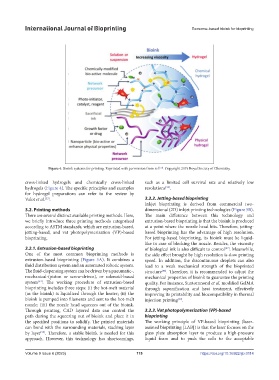
                      Figure 4. Bioink systems for printing. Reprinted with permission from ref. . Copyright 2019 Royal Society of Chemistry.
                                                                     [53]

            cross-linked hydrogels and chemically cross-linked   such as a limited cell survival rate and relatively low
            hydrogels (Figure 4). The specific principles and examples   resolutions .
                                                                        [56]
            for hydrogel preparations can refer to the review by
            Valot et al. .                                     3.2.2. Jetting-based bioprinting
                    [53]
                                                               Inkjet bioprinting is derived from commercial two-
            3.2. Printing methods                              dimensional (2D) inkjet printing technologies (Figure 5B).
            There are several distinct available printing methods. Here,   The main difference between this technology and
            we briefly introduce three printing methods categorized   extrusion-based bioprinting is that the bioink is produced
            according to ASTM standards, which are extrusion-based,   at a point where the nozzle head hits. Therefore, jetting-
            jetting-based, and vat photopolymerization (VP)-based   based bioprinting has the advantage of high resolution.
            bioprinting.                                       For  jetting-based  bioprinting,  its  bioink  must  be  liquid-
                                                               like in case of blocking the nozzle. Besides, the viscosity
            3.2.1. Extrusion-based bioprinting                 of biological ink is also difficult to control . Meanwhile,
                                                                                                 [57]
            One  of  the  most  common  bioprinting  methods  is   the side effect brought by high resolution is slow printing
            extrusion-based bioprinting (Figure 5A). It combines a   speed. In addition, the discontinuous droplets can also
            fluid distribution system and an automated robotic system.   lead  to  a  weak  mechanical strength  of  the  bioprinted
            The fluid-dispensing system can be driven by a pneumatic-,   structure . Therefore, it is recommended to adjust the
                                                                      [58]
            mechanical-(piston or screw-driven), or solenoid-based   mechanical properties of bioink to guarantee the printing
            system . The working procedure of extrusion-based   quality. For instance, Suntornnond et al. modified GelMA
                 [54]
            bioprinting includes three steps: (i) the hot-melt material   through  saponification  and  heat  treatment,  effectively
            (as  the  bioink)  is  liquidized  through  the  heater;  (ii)  the   improving its printability and biocompatibility in thermal
            bioink is pumped into filaments and sent to the hot-melt   injection printing .
                                                                             [59]
            nozzle; (iii) the nozzle head squeezes out of the bioink.
            Through  printing,  CAD  layered  data  can  control  the   3.2.3. Vat photopolymerization (VP)-based
            path  during  the  squeezing  out  of  bioink  and  place  it  in   bioprinting
            the specified positions to solidify. The printed materials   The working principle of VP-based bioprinting (laser-
            can bond with the surrounding materials, stacking layer   assisted bioprinting [LAB]) is that the laser focuses on the
            by layer . Therefore, a stable bioink is needed for this   glass plate absorption layer to produce a high-pressure
                  [55]
            approach. However, this technology has shortcomings,   liquid foam and to push the cells to the acceptable

            Volume 9 Issue 6 (2023)                        115                         https://doi.org/10.36922/ijb.0114

