


Page 120 - IJB-9-6
P. 120
International Journal of Bioprinting                                   Exosome-based bioink for bioprinting


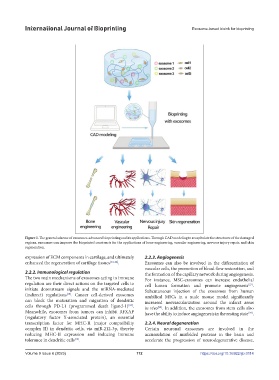
            Figure 1. The general scheme of exosomes-advanced bioprinting and its applications. Through CAD modeling to recapitulate the structures of the damaged
            regions, exosomes can improve the bioprinted constructs for the applications of bone engineering, vascular engineering, nervous injury repair, and skin
            regeneration.

            expression of ECM components in cartilage, and ultimately   2.2.3. Angiogenesis
            enhanced the regeneration of cartilage tissues [21-24] .  Exosomes  can also be  involved  in  the differentiation  of
                                                               vascular cells, the promotion of blood flow restoration, and
            2.2.2. Immunological regulation                    the formation of the capillary network during angiogenesis.
            The two main mechanisms of exosomes acting in immune   For instance, MSC-exosomes can increase endothelial
            regulation are their direct actions on the targeted cells to   cell lumen formation and promote angiogenesis .
                                                                                                           [27]
            initiate downstream signals and the miRNA-mediated   Subcutaneous injection of the exosomes from human
            (indirect) regulations . Cancer cell-derived exosomes   umbilical MSCs in a nude mouse model significantly
                             [18]
            can block the maturation and migration of dendritic   increased neovascularization around the infarct areas
            cells  through  PD-L1  (programmed  death  ligand-1) .   in vivo . In addition, the exosomes from stem cells also
                                                        [25]
                                                                    [28]
            Meanwhile, exosomes from tumors can inhibit RFXAP   have the ability to induce angiogenesis in the resting state .
                                                                                                           [29]
            (regulatory factor X-associated protein), an essential
            transcription factor for MHC-II (major compatibility   2.2.4. Neural degeneration
            complex II) in dendritic cells, via miR-212-3p, thereby   Certain neuronal exosomes are involved in the
            reducing MHC-II expression and inducing immune     accumulation  of  misfolded  proteins  in  the  brain  and
            tolerance in dendritic cells .                     accelerate the progression of neurodegenerative disease,
                                 [26]
            Volume 9 Issue 6 (2023)                        112                         https://doi.org/10.36922/ijb.0114

