


Page 145 - IJB-9-6
P. 145
International Journal of Bioprinting                     3D printed bioactive dressings for burn wound treatment


             (iii)  Non-printed hydrogel: Wounds covered with non-  viable tissue that appeared black, brown, or gray in color
                 printed hydrogel                              and had a dry, leathery texture. The extent of necrotic tissue
             (iv)  3D-printed  hydrogel: Wounds  covered  with   removal was documented for each sample. The animals
                 3D-printed hydrogel dressings                 were euthanized after 4 weeks using a lethal dose of CO .
                                                                                                            2
                                                               Wound tissue explants were collected and fixed in formalin
             (v)  Non-printed hydrogel–BBG: Wounds covered with   solution overnight for further histology investigation.
                 non-printed hydrogel–BBG
                                                               2.9.2. Wound closure
             (vi)  3D-printed hydrogel–BBG: Wounds covered with   Wounds were rebandaged and photographed every 7 days
                 3D-printed hydrogel–BBG dressings             to track the wound size, color, edge, re-epithelialization,
               The animals were anesthetized using isoflurane.   necrotic tissue formation, and secondary trauma caused
            After shaving the dorsal area, the skin was cleaned with   by dressing removal. A sterile disposable ruler was placed
            iodine and then sterilized with alcohol swabs three times.   in close proximity to the wound, serving as a scale for
            The  second-degree  burn  was made  by  placing  a  100°C   measurement purposes. The wound size was quantified by
            aluminum bar with a diameter of 20 mm on the dorsal   tracing the wound border in each photograph using ImageJ
            area for 10 s. After implementation, the wounds were   software. The wound closure was calculated as follows:
            disinfected by Dermoplast antiseptic spray (Advantice
            Health LLC, New Jersey, USA). After applying the                                              (V)
            dressings,  the  wounds  were  covered  with  Petrolatum
            Gauze and Elastikon bandages (3M, Minnesota, USA).   where  A  is the  wound area after wound creation, and
                                                                      0
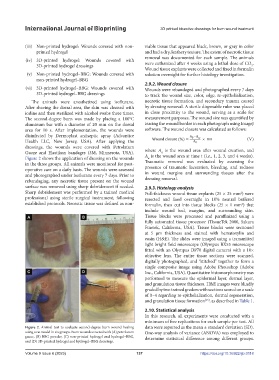
            Figure 2 shows the application of dressing on the wounds   A  is the wound area at time t (i.e., 1, 2, 3, and 4 weeks).
                                                                w
            in the three groups. All animals were monitored for post‐  Traumatic removal was evaluated by assessing the
            operative care on a daily basis. The wounds were assessed   presence of traumatic laceration, bleeding, and redness
            and photographed under isoflurane every 7 days. Prior to   in wound margins and surrounding tissues after the
            rebandaging, any necrotic tissue present on the wound   dressing removal.
            surface was removed using sharp debridement if needed.   2.9.3. Histology analysis
            Sharp debridement was performed by a trained medical   Full-thickness wound tissue explants (25 × 25 mm ) were
                                                                                                        2
            professional using sterile surgical instrument, following   resected and fixed overnight in 10% neutral buffered
            established protocols. Necrotic tissue was defined as non-  formalin, then cut into tissue blocks (25 × 1 mm ) that
                                                                                                        2
                                                               include wound bed, margins, and surrounding skin.
                                                               Tissue blocks were processed and paraffinized using a
                                                               fully automated tissue processor (TissueTek 2000, Sakura
                                                               Finetek, California, USA). Tissue blocks were sectioned
                                                               at 5 µm thickness and stained with hematoxylin and
                                                               eosin (H&E). The slides were imaged using a transmitted
                                                               light bright field microscope (Olympus BX53 microscope
                                                               fitted with an Olympus DP70 digital camera) with a 10×
                                                               objective lens. The entire tissue sections were scanned,
                                                               digitally photographed, and “stitched” together to form a
                                                               single composite image using Adobe Photoshop (Adobe
                                                               Inc., California, USA). Quantitative histomorphometry was
                                                               performed to measure the epidermal layer, dermal layer,
                                                               and granulation tissue thickness. H&E images were blindly
                                                               graded by two trained graders with sections scored on a scale
                                                               of 0–4 regarding re-epithelialization, dermal regeneration,
                                                               and granulation tissue formation , as described in Table 1.
                                                                                        [65]
                                                               2.10. Statistical analysis
                                                               In this research, all experiments were conducted with a
                                                               minimum of five replications for each sample per test. All
            Figure 2. Animal test to evaluate second-degree burn wound healing   data were reported as the mean ± standard deviation (SD).
            using a rat model in six groups. Burn wounds covered with (A) petrolatum   One-way analysis of variance (ANOVA) was employed to
            gauze, (B) BBG powder, (C) non-printed hydrogel and hydrogel–BBG,   determine statistical difference among different groups.
            and (D) 3D-printed hydrogel and hydrogel–BBG dressings.

            Volume 9 Issue 6 (2023)                        137                         https://doi.org/10.36922/ijb.0118

