


Page 197 - IJB-9-6
P. 197
International Journal of Bioprinting                              Attractiveness of 4D printing in medical field


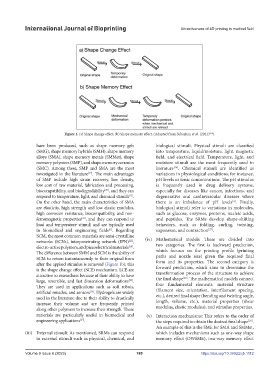
                             Figure 1. (a) Shape change effect. (b) Shape memory effect. (Adapted from Subeshan et al. (2021) )
                                                                                          [18]
                 have been produced, such as shape memory gels      biological stimuli. Physical stimuli are classified
                 (SMG), shape memory hybrids (SMH), shape memory    into temperature, liquid/moisture, light, magnetic
                 alloys (SMA), shape memory metals (SMMet), shape   field, and electrical field. Temperature, light, and
                 memory polymers (SMP), and shape memory ceramics   moisture stimuli are the most frequently used in
                 (SMC). Among these, SMP and SMA are the most       literature . Chemical stimuli are identified as
                                                                           [26]
                 investigated in the literature . The main advantages   variations in physiological conditions, for instance,
                                       [19]
                 of  SMP  include  high  strain  recovery,  low  density,   pH levels or ionic concentrations. The pH stimulus
                 low cost of raw material, fabrication and processing,   is frequently used in drug delivery systems,
                 biocompatibility, and biodegradability , and they can   especially for diseases like cancer, infections, and
                                              [20]
                 respond to temperature, light, and chemical stimuli .   degenerative and cardiovascular diseases where
                                                        [12]
                 On the other hand, the main characteristics of SMA   there is an imbalance of pH levels . Finally,
                                                                                                    [6]
                 are elasticity, high strength and low elastic modulus,   biological stimuli refer to variations in molecules,
                 high corrosion resistance, biocompatibility, and non-  such as glucose, enzymes, proteins, nucleic acids,
                 ferromagnetic properties , and they can respond to   and peptides. The SRMs develop shape-shifting
                                    [21]
                 load and temperature stimuli and are typically used   behaviors, such as folding, curling, twisting,
                 in biomedical and engineering fields . Regarding   expansion, and contraction .
                                                                                          [27]
                                               [6]
                 SCM, the most common materials are semi-crystalline
                 networks (SCNs), interpenetrating network (IPN) ,     (iv)  Mathematical models: These are divided into
                                                        [22]
                 electro-active polymers, and piezoelectrical materials .   two categories. The first is backward prediction,
                                                        [20]
                 The difference between SMM and SCM is the ability of   which  focuses  on the printing profile (printing
                 SCM to return instantaneously to their original form   paths and nozzle  size) given the required final
                 after the applied stimulus is removed (Figure 1b); this   form  and  its  properties.  The  second  category  is
                 is the shape change effect (SCE) mechanism. LCE are   forward prediction, which aims to determine the
                 attractive to researchers because of their ability to have   transformation process  of the  structure  to achieve
                                                                               [28]
                 large, reversible, and fast dimension deformations .   the final shape . The mathematical models connect
                                                        [23]
                 They are used in applications such as soft robots,   four fundamental elements: material structure
                 artificial muscles, and sensors . Hydrogels are widely   (filament size, orientation, interfilament spacing,
                                       [24]
                 used in the literature due to their ability to drastically   etc.), desired final shape (bending and twisting angle,
                 increase their volume and are frequently printed   length, volume, etc.), material properties (shear
                 along other polymers to increase their strength. These   modulus, elastic modulus), and stimulus properties.
                 materials are particularly useful in biomedical and    (v)  Interaction mechanisms: This refers to the order of
                 engineering applications .                         the steps required to obtain the desired final shape .
                                   [25]
                                                                                                           [29]
                                                                    An example of this is the SME for SMA and SMMet,
              (iii)  External stimuli: As mentioned, SRMs can respond   which includes mechanisms such as one-way shape
                 to external stimuli such as physical, chemical, and   memory effect (OWSME), two-way memory effect


            Volume 9 Issue 6 (2023)                        189                         https://doi.org/10.36922/ijb.1112

