


Page 192 - IJB-9-6
P. 192
International Journal of Bioprinting                   3D-printed assembly anatomical patella fracture bone plate


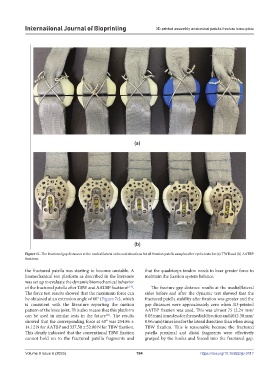
            Figure 11. The fractured gap distances at the medial/lateral sides and situations for all fixation patella samples after cyclic tests for (a) TWB and (b) AATBP
            fixations.

            the fractured patella was starting to become unstable. A   that the quadriceps tendon needs to bear greater force to
            biomechanical test platform as described in the literature   maintain the fixation system balance.
            was set up to evaluate the dynamic biomechanical behavior
            of the fractured patella after TBW and AATBP fixations [2-5] .   The fracture gap distance results at the medial/lateral
            The force test results showed that the maximum force can   sides before and after the dynamic test showed that the
            be obtained at an extension angle of 60° (Figure 7c), which   fractured patella stability after fixation was greater and the
            is consistent with the literature reporting the motion   gap distances were approximately zero when 3D-printed
            pattern of the knee joint. This also means that this platform   AATBP fixation was used. This was almost 75 (2.24 mm/
            can be used in similar tests in the future . The results   0.03 mm) times less for the medial direction and 40 (2.30 mm/
                                              [23]
            showed that the corresponding force at 60° was 254.86 ±    0.06 mm) times less for the lateral direction than when using
            14.12 N for AATBP and 337.58 ± 52.00 N for TBW fixation.   TBW fixation. This is reasonable because the fractured
            This clearly indicated that the conventional TBW fixation   patella proximal and distal fragments were effectively
            cannot hold on to the fractured patella fragments and   grasped by the hooks and forced into the fractured gap.


            Volume 9 Issue 6 (2023)                        184                         https://doi.org/10.36922/ijb.0117

