


Page 210 - IJB-9-6
P. 210
International Journal of Bioprinting                     Multi-Cellular tissues/organoids manufacturing strategies


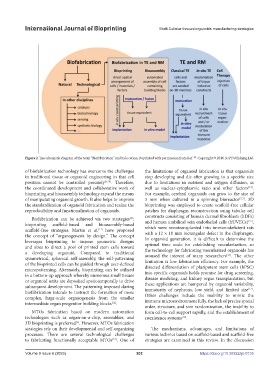
            Figure 2. The schematic diagram of the term “Biofabrication” and its location. Reprinted with permission from Ref.  . Copyright © 2016 IOP Publishing Ltd.
                                                                                    [8]

            of biofabrication technology has overcome the challenges   the limitations of organoid fabrication is that organoids
            in traditional tissue or organoid engineering in that cell   stop developing and die after growing to a specific size
            position cannot be controlled precisely [9,10] . Therefore,   due to limitations in nutrient and oxygen diffusion, as
            the coordinated development and collaborative work of   well as nuclear-cytoplasmic ratio and other factors .
                                                                                                           [14]
            bioprinting and bioassembly technology expand the means   For example, cerebral organoids can grow to the size of
            of manipulating organoid growth. It also helps to improve   3 mm when cultured in a spinning bioreactor [2,3] . 3D
            the standardization of organoid fabrication and realize the   bioprinting was employed to create scaffold-free cellular
            reproducibility and functionalization of organoids.  patches for diaphragm reconstruction using tabular cell
                                                               constructs consisting of human dermal fibroblasts (hDFs)
               Biofabrication can be achieved via two strategies :
                                                        [8]
                                                                                                           [15]
            bioprinting  scaffold-based  and  bioassembly-based  and human umbilical vein endothelial cells (hUVECs) ,
            scaffold-free strategies. Martin  et  al.  have proposed   which  were  xenotransplanted  into  immunodeficient  rats
                                           [11]
            the concept of “organogenesis by design.” The concept   with a 12 × 10 mm rectangular defect in the diaphragm.
            leverages bioprinting to impose geometric designs   In organoid generation, it is difficult to determine the
            and sizes to direct a pool of printed stem cells toward   optimal time node for establishing vascularization, so
            a  developing  organoid.  Compared  to  traditional   the technology for fabricating vascularized organoids has
                                                                                                  [16]
            symmetrical, spherical self-assembly, the self-patterning   aroused the interest of many researchers . The other
            of the bioprinted cells can be guided through user-defined   limitation is low fabrication efficiency. For example, the
            micropatterning. Alternately, bioprinting can be utilized   directed differentiation of pluripotent stem cells (hPSC)
            in a bottom-up approach whereby numerous small tissues   into specific organoids holds promise for drug screening,
            or organoid units are deposited spatiotemporally to drive   disease modeling, and kidney organ transplantation, but
            subsequent development. The patterning imposed during   these applications are hampered by organoid variability,
                                                                                                           [17]
            biofabrication intends to instruct the formation of more   immaturity of nephrons, low yield, and limited size .
            complex, large-scale organogenesis from the smaller   Other challenges include the inability to mimic the
                                                 [12]
            intermediate organ progenitor building blocks .    immune microenvironment fully, the lack of precise spatial
                                                               order, structure, and size randomization, the inability to
               MTOs fabrication based on modern automation     form cell-to-cell support rapidly, and the establishment of
            technologies such as organ-on-a-chip, assemblies, and   coexistence systems .
                                                                               [18]
            3D bioprinting is preferred . However, MTOs fabrication
                                 [6]
            strategies rely on their developmental and self-organizing   The mechanisms, advantages, and limitations of
            processes. There are several technological challenges   various technics based on scaffold-based and scaffold-free
            to fabricating functionally acceptable MTOs . One of   strategies are examined in this review. In the discussion
                                                 [13]
            Volume 9 Issue 6 (2023)                        202                        https://doi.org/10.36922/ijb.0135

