


Page 285 - IJB-9-6
P. 285
International Journal of Bioprinting                                Progress in bioprinted ear reconstruction


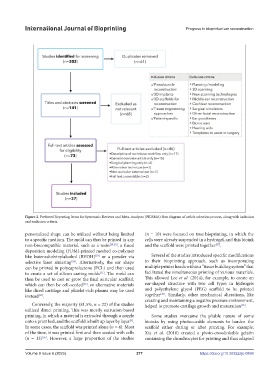
            Figure 2. Preferred Reporting Items for Systematic Reviews and Meta-Analyses (PRISMA) flow diagram of article selection process, along with inclusion
            and exclusion criteria.

            personalized shape can be utilized without being limited   (n = 10) were focused on true bioprinting, in which the
            to a specific medium. The mold can thus be printed in any   cells were already suspended in a hydrogel, and this bioink
                                                                                             [27]
            non-biocompatible material, such as a resin [20,22] , a fused   and the scaffold were printed together .
            deposition modeling (FDM)-printed meshed co-polymer
                                          [23]
            like butenediolvinylalcohol (BVOH)  or a powder via   Several of the studies introduced specific modifications
                               [24]
            selective laser sintering . Alternatively, the ear shape   to their bioprinting approach, such as incorporating
            can be printed in polycaprolactone (PCL) and then used   multiple printer heads within a “tissue building system” that
                                            [11]
            to create a set of silicon casting molds . The mold can   facilitated the simultaneous printing of various materials.
            then be used to cast or grow the final auricular scaffold,   This allowed Lee et al. (2014), for example, to create an
                                    [25]
            which can then be cell-seeded , or alternative materials   ear-shaped structure with two cell types in hydrogels
            like diced cartilage and platelet-rich plasma may be used   and polyethylene glycol (PEG) scaffold to be printed
                                                                     [26]
                  [24]
            instead .                                          together . Similarly, other mechanical alterations, like
                                                               creating and maintaining a negative pressure environment,
               Conversely, the majority (81.5%, n = 22) of the studies   helped to promote cartilage growth and maturation .
                                                                                                        [25]
            utilized direct printing. This was mostly extrusion-based
            printing, in which a material is extruded through a nozzle   Some  studies  overcame  the  pliable  nature  of  some
            onto a print bed, and the scaffold is built up layer by layer .   bioinks by using photocurable elements to harden the
                                                        [9]
            In some cases, the scaffold was printed alone (n = 4). Most   scaffold  either  during  or  after  printing.  For  example,
            of the time, it was printed first and then seeded with cells   Xia  et  al. (2018) created a photo-crosslinkable gelatin
            (n = 13) . However, a large proportion of the studies    containing the chondrocytes for printing and thus adapted
                   [26]
            Volume 9 Issue 6 (2023)                        277                        https://doi.org/10.36922/ijb.0898

