


Page 283 - IJB-9-6
P. 283
International Journal of Bioprinting                                Progress in bioprinted ear reconstruction


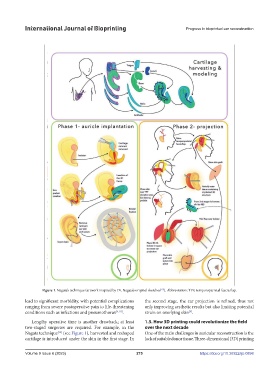
                   Figure 1. Nagata’s technique (artwork inspired by Dr. Nagata’s original sketches ). Abbreviation: TPF, temporoparietal fascia flap.
                                                                     [13]
            lead to significant morbidity, with potential complications   the second stage, the ear projection is refined, thus not
            ranging from severe postoperative pain to life-threatening   only improving aesthetic results but also limiting potential
            conditions such as infections and pneumothorax [4,10] .  strain on overlying skin .
                                                                                  [4]
               Lengthy operative time is another drawback; at least   1.3. How 3D printing could revolutionize the field
            two-staged surgeries are required. For example, in the   over the next decade
            Nagata technique  (see Figure 1), harvested and reshaped   One of the main challenges in auricular reconstruction is the
                          [13]
            cartilage is introduced under the skin in the first stage. In   lack of suitable donor tissue. Three-dimensional (3D) printing

            Volume 9 Issue 6 (2023)                        275                        https://doi.org/10.36922/ijb.0898

