


Page 36 - IJB-9-6
P. 36
International Journal of Bioprinting                                 Transdermal delivery of printed cisplatin


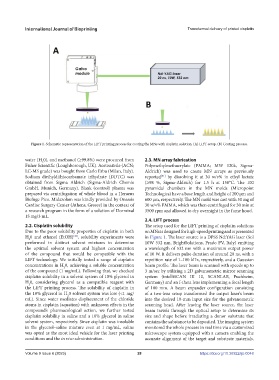
              Figure 1. Schematic representation of the LIFT printing process for coating the MNs with cisplatin solution. (A) LIFT setup. (B) Coating process.


            water (H 0), and methanol (≥99.8%) were procured from   2.3. MN array fabrication
                   2
            Fisher Scientific (Loughborough, UK). Acetonitrile (ΑCN;   Polymethylmethacrylate (PMMA; MW 120k, Sigma-
            LC-MS grade) was bought from Carlo Erba (Milan, Italy).   Aldrich) was used to create MN arrays as previously
            Sodium diethyldithiocarbamate trihydrate (DDTC) was   reported  by dissolving  it at 30 w/v%  in ethyl lactate
                                                                      [31]
            obtained from Sigma Aldrich (Sigma-Aldrich Chemie   (≥98  %, Sigma-Aldrich) for 1.5 h at 150°C. The 100
            GmbH, Munich, Germany). Blank (control) plasma was   pyramidal chambers in the MN molds (Micropoint
            prepared via centrifugation of whole blood in a Heraeus   Technologies) have a base length and height of 200 µm and
            Biofuge Pico. Midazolam was kindly provided by Onassis   600 µm, respectively. The MN mold was cast with 50 mg of
            Cardiac Surgery Center (Athens, Greece) in the context of   30 w/v% PMMA, which was then centrifuged for 30 min at
            a research program in the form of a solution of Dormixal   3500 rpm and allowed to dry overnight in the fume hood.
            15 mg/3 mL.
                                                               2.4. LIFT process
            2.2. Cisplatin solubility                          The setup used for the LIFT printing of cisplatin solutions
            Due to the poor solubility properties of cisplatin in both   on MNs is designed for high-speed printing and is presented
            H 0 and ethanol (EtOH) , solubility experiments were   in Figure 1. The laser source is a DPSS Nd:YAG laser (Sol
                                [30]
             2
            performed in distinct solvent mixtures to determine   10W 532 nm, BrightSolutions, Prado PV, Italy) emitting
            the  optimal  solvent  system  and highest  concentration   a wavelength of 532 nm with a maximum output power
            of the compound that would be compatible with the   of 10 W. It delivers pulse duration of around 20 ns, with a
            LIFT technology. We initially tested a range of cisplatin   repetition rate of 1–100 kHz, respectively, and a Gaussian
            concentrations in H 0, achieving a soluble concentration   beam profile. The laser beam is scanned with speeds up to
                            2
            of the compound (1 mg/mL). Following that, we checked   3 m/sec by utilizing a 2D galvanometric mirror scanning
            cisplatin solubility in a solvent system of 10% glycerol in   system  (intelliSCAN  ΙΙΙ  10,  SCANLAB,  Puchheim,
            H 0, considering glycerol as a compatible reagent with   Germany) and an f-theta lens implementing a focal length
             2
            the LIFT printing process. The solubility of cisplatin in   of  100  mm.  A  beam  expander  configuration  consisting
            the 10% glycerol in H 0 solvent system was low (<1 mg/  of a two-lens setup transformed the output laser’s beam
                              2
            mL). Since water mediates displacement of the chloride   into the desired 10-mm input size for the galvanometric
            atoms in cisplatin (aquation) with unknown effects in the   scanning head. After leaving the laser source, the laser
            compound’s pharmacological action, we further tested   beam travels through the optical setup to determine its
            cisplatin solubility in saline and a 10% glycerol in saline   size and shape before irradiating a donor substrate that
            solvent system, respectively. Since cisplatin was insoluble   contains the substance to be deposited. The imaging system
            in the glycerol–saline mixture even at 1 mg/mL, saline   monitored the whole process in real time via a customized
            was opted as the most ideal vehicle for the laser printing   microscope system equipped with a camera enabling the
            conditions and the in vivo administration.         accurate alignment of the target and substrate materials.


            Volume 9 Issue 6 (2023)                         28                        https://doi.org/10.36922/ijb.0048

