


Page 434 - IJB-9-6
P. 434
International Journal of Bioprinting                                Versatile pomelo peel-inspired structures


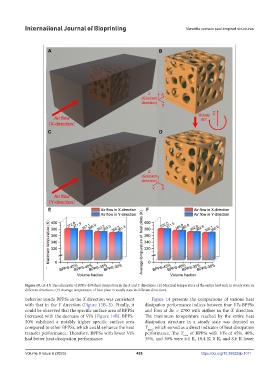
            Figure 10. (A–D) The schematic of BPPS-45% heat dissipation in the X and Y directions. (E) Maximal temperature of the entire heat sink in steady state in
            different directions. (F) Average temperature of heat plate in steady state in different directions.

            behavior inside BPPSs in the X direction was consistent   Figure 14 presents the comparisons of various heat
            with that in the Y direction (Figure 13B–E). Finally, it   dissipation performance indices between four VFs BPPSs
            could be observed that the specific surface area of BPPSs   and Fins at  Re  = 2700 with airflow in the  X direction.
            increased with the decrease of VFs (Figure 14B). BPPS-  The maximum temperature reached by the entire heat
            30% exhibited a notably higher specific surface area   dissipation structure in a steady state was denoted as
            compared to other BPPSs, which could enhance the heat   T max , which served as a direct indicator of heat dissipation
            transfer performance. Therefore, BPPSs with lower VFs   performance. The  T max  of BPPSs with  VFs of 45%, 40%,
            had better heat dissipation performance.           35%, and 30% were 6.1 K, 10.4 K, 8 K, and 8.6 K lower


            Volume 9 Issue 6 (2023)                        426                         https://doi.org/10.36922/ijb.1011

