


Page 435 - IJB-9-6
P. 435
International Journal of Bioprinting                                Versatile pomelo peel-inspired structures


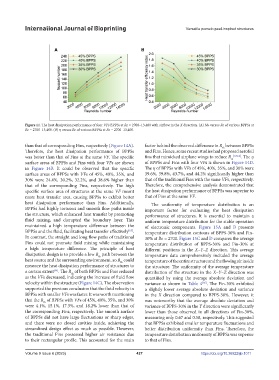
            Figure 11. The heat dissipation performance of four VFs BPPSs at Re = 2700–13,400 with airflow in the X direction. (A) Nu versus Re of various BPPSs at
            Re = 2700–13,400. (B) η versus Re of various BPPSs at Re = 2700–13,400.


            than that of corresponding Fins, respectively (Figure 14A).   factor behind the observed difference in R  between BPPSs
                                                                                                th
            Therefore,  the  heat  dissipation  performance  of  BPPSs   and Fins. Hence, some recent studies had proposed aerofoil
            was better than that of Fins at the same VF. The specific   fins that mimicked airplane wings to reduce R th [63,64] . The η
            surface areas of BPPSs and Fins with four VFs are shown   of BPPSs and Fins with four VFs is shown in Figure 14D.
            in  Figure 14B. It could be observed that the specific   The η of BPPSs with VFs of 45%, 40%, 35%, and 30% were
            surface areas of BPPSs with VFs of 45%, 40%, 35%, and   39.6%, 39.8%, 43.7%, and 44.2% significantly higher than
            30%  were  24.4%,  30.2%,  32.2%,  and  38.6%  higher  than   that of the traditional Fins with the same VFs, respectively.
            that of the corresponding Fins, respectively. The high   Therefore, the comprehensive analysis demonstrated that
            specific surface area of structures at the same VF meant   the heat dissipation performance of BPPSs was superior to
            more heat transfer area, causing BPPSs to exhibit better   that of Fins at the same VF.
            heat dissipation performance than Fins. Additionally,   The uniformity of temperature distribution is an
            BPPSs had highly tortuous and smooth flow paths inside   important factor for  evaluating  the  heat dissipation
            the structure, which enhanced heat transfer by promoting   performance of structures.  It  is essential  to  maintain a
            fluid mixing, and disrupted the boundary layer. This   uniform temperature distribution for the stable operation
            maintained a high temperature difference between the   of electronic components.  Figure 15A and  B  presents
            BPPSs and the fluid, facilitating heat transfer effectively .   temperature distribution contours of BPPS-30% and Fin-
                                                        [65]
            In contrast, the straight and long flow paths of traditional   30% at Re = 2700. Figure 15C and D compares the average
            Fins could not promote fluid mixing while maintaining   temperature distribution of BPPS-30% and Fin-30% at
            a high temperature difference. The principle of heat   different  positions  in  the  X–Y–Z  direction.  This  average
            dissipation design is to provide a low R  path between the   temperature  data  comprehensively  included  the  average
                                           th
            heat source and the surrounding environment, so R  could   temperature of the entire structure and the flowing air inside
                                                    th
            measure the heat dissipation performance of structures to   the structure. The uniformity of the average temperature
            a certain extent . The R  of both BPPSs and Fins reduced   distribution of the structure in the X–Y–Z direction was
                        [44]
                               th
            as the VFs decreased, indicating the increase of fluid flow   quantified by using the average absolute deviation and
            velocity within the structure (Figure 14C). The observation   variance as shown in  Table 4 . The Fin-30% exhibited
                                                                                       [66]
            supported the previous conclusion that the fluid velocity in   a slightly lower average absolute  deviation and variance
            BPPSs with smaller VFs was faster. It was worth mentioning   in the  X direction compared to BPPS-30%. However, it
            that the R  of BPPSs with VFs of 45%, 40%, 35%, and 30%   was noteworthy that the average absolute deviation and
                    th
            were  4.1%, 15.1%,  17.3%, and  18.2% lower  than that of   variance of BPPS-30% in the Y direction were significantly
            the corresponding Fins, respectively. The smooth surface   lower than those observed in all directions of Fin-30%,
            of BPPSs did not have large fluctuations or sharp edges,   measuring only 0.67 and 0.58, respectively. This suggested
            and there were no closed cavities inside, achieving the   that BPPSs exhibited smaller temperature fluctuations and
            streamlined design effect as much as possible. However,   better distribution uniformity than Fins. Therefore, the
            the traditional Fins possessed higher air resistance due   temperature distribution uniformity of BPPSs was superior
            to their rectangular profile. This accounted for the main   to that of Fins.

            Volume 9 Issue 6 (2023)                        427                         https://doi.org/10.36922/ijb.1011

