


Page 50 - IJB-9-6
P. 50
International Journal of Bioprinting                           Sub-regional design of the bionic bone scaffolds


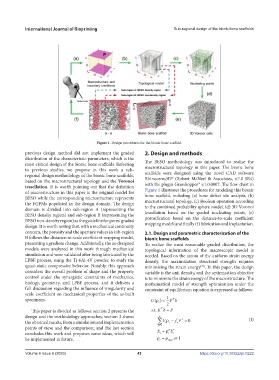
                                          Figure 1. Design procedures for the bionic bone scaffold.

            previous design method did not implement the graded   2. Design and methods
            distribution of the characteristic parameters, which is the
            most critical design of the bionic bone scaffolds. Referring   The BESO methodology was introduced to realize the
            to previous studies, we propose in this work a sub-  macrostructural topology in this paper. The bionic bone
            regional design methodology of the bionic bone scaffolds,   scaffolds were designed  using the novel CAD software
                                                                          ©
            based on the macrostructural topology and the Voronoi   Rhinoceros3D  (Robert McNeel & Associates, v.7.0 SR4)
            tessellation. It is worth pointing out that the definition   with the plugin Grasshopper™ v.1.0.0007. The flow chart in
            of macrostructure in this paper is the original model for   Figure 1 illustrates the procedures for modeling this bionic
            BESO while the corresponding microstructure represents   bone scaffold, including (a) bone defect site analysis, (b)
            the FGPMs populated in the design domain. The design   macrostructural topology, (c) Boolean operation according
            domain  is  divided  into  sub-region  A  (representing  the   to the combined probability sphere model, (d) 3D Voronoi
            BESO density region) and sub-region B (representing the   tessellation  based  on  the  graded  nucleating  points,  (e)
            BESO non-density region) as the guideline for pores’ graded   porosification  based  on  the  distance-to-scale  coefficient
            design. It is worth noting that, with a mechanical continuity   mapping model, and finally (f) fabrication and implantation.
            concern, the porosity and the aperture values in sub-region   2.1. Design and parametric characterization of the
            B follows the distance-to-scale coefficient mapping model,   bionic bone scaffolds
            presenting a gradient change. Additionally, the as-designed   To realize the most reasonable graded distribution, the
            models were analyzed in this work through mechanical   topological  information  of the  macroscopic  model is
            simulation and were validated after being fabricated by the   needed. Based on the axiom of the uniform strain energy
            LPBF process, using the Ti-6Al-4V powder, to study the   density,  the  maximization  structural  strength  requires
            quasi-static compressive behavior. Notably, this approach   minimizing the strain energy . In this paper, the design
                                                                                       [37]
            considers the overall problem of shape and the property   variable is the unit density, and the optimization objective
            control under the synergistic constraints of mechanics,   is to minimize the strain energy of the macrostructure. The
            biology,  geometry,  and  LPBF  process,  and  it delivers  a   mathematical model of strength optimization under the
            full discussion regarding the influence of irregularity and   constraint of equilibrium equation is expressed as follows:
            scale coefficient on mechanical properties of the as-built
            specimens.                                           U()ρ =  1  P δ
                                                                           T
                                                                     i
                                                                        2
               This paper is divided as follows: section 2 presents the   s tK..   T δ =  P
            design and the methodology approaches; section 3 shows   n         ∗                           (I)
            the obtained results, from a simulation and implementation         ∑ V ρ −  f V = 0
                                                                         i
                                                                            v
                                                                        i
            points of view, and the comparison; and the last section   i=1  p  ∗
            concludes this work and proposes some ideas, which will         E =  ρ i  E i
                                                                     i
            be implemented in future.                                   ρ =  ρ min   or 1
                                                                     i
            Volume 9 Issue 6 (2023)                         42                        https://doi.org/10.36922/ijb.0222

