


Page 55 - IJB-9-6
P. 55
International Journal of Bioprinting                           Sub-regional design of the bionic bone scaffolds


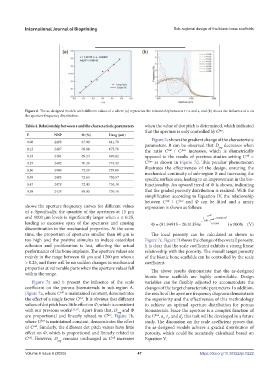
            Figure 6. The as-designed models with different values of ε where (a) represents the relationship between r / a and ε, and (b) shows the influence of ε on
            the aperture frequency distribution.

            Table 4. Relationship between ε and the characteristic parameters  when the value of dot pitch is determined, which indicated
                                                               that the aperture is only controlled by C .
                                                                                               face
             Ε          NNP         Ф (%)       Davg (μm)
                                                                  Figure 7c shows the gradient change of the characteristic
             0.06       2498        67.90       641.70
                                                               parameters. It can be observed that D  decreases when
                                                                                              avg
             0.12       2487        69.88       673.78         the ratio  C  /  C   increases, which is diametrically
                                                                         cell
                                                                               face
             0.18       2484        69.24       696.02         opposed to the results of previous studies setting  C  =
                                                                                                          cell
                                                                face
             0.25       2482        70.26       716.32         C    as  shown  in  Figure  7d.  This  peculiar  phenomenon
                                                               illustrates the effectiveness of the design, ensuring the
             0.30       2480        72.28       729.88
                                                               mechanical continuity of sub-region B and increasing the
             0.39       2483        72.63       730.57         specific surface area, leading to an improvement in the bio-
             0.47       2479        72.43       730.18         functionality. An upward trend of Ф is shown, indicating
             0.58       2435        69.05       730.16         that the graded porosity distribution is realized. With the
                                                               simplification according to Equation IV, the relationship
                                                               between  C  /  C   and  Ф can be fitted and a unary
                                                                        cell
                                                                             face
            shows the aperture frequency curves for different values   expression is shown as follows:
            of  ε. Specifically, the quantity of the apertures at 15 μm
            and 1000 μm levels is significantly larger when ε ≤ 0.25,                   (  C cell cell  − . 0 60613 ) 2
            leading to excessive span of the apertures and causing   Φ= (.91 94915 20 .31354e  −  140 −C . 1 61989  ) ×1000%  (V)
                                                                             −
            discontinuities in the mechanical properties. At the same
            time, the proportion of apertures smaller than 60 μm is   The local porosity can be calculated as shown in
            too high and the positive stimulus to induce osteoblast   Figure 7e. Figure 7f shows the change of the overall porosity.
            adhesion and proliferation is lost, affecting the actual   It is clear that the scale coefficient exhibits a strong linear
            performance of the bone implants. The aperture values are   relationship with the porosity. The overall target porosity
            mainly in the range between 60 μm and 1200 μm when ε   of the bionic bone scaffolds can be controlled by the scale
            > 0.25, and there will be no sudden changes in mechanical   coefficient.
            properties at vulnerable parts when the aperture values fall   The above results demonstrate that the as-designed
            within the range.
                                                               bionic bone scaffolds are highly controllable. Design
               Figure 7a and  b present the influence of the scale   variables can be flexibly adjusted to accommodate the
            coefficient on the porous biomaterials in sub-region A.   changes of the target characteristic parameters. In addition,
            Figure 7a, where C  is maintained constant, demonstrates   the results of the aperture frequency diagrams demonstrate
                           cell
            the effect of a single factor C . It is obvious that different   the superiority and the effectiveness of this methodology
                                   face
            values of dot pitch have little effect on Ф, which is consistent   to achieve an optimal aperture distribution for porous
            with our previous works [12,13] . Apart from that, D  and Ф   biomaterials. Since the aperture is a complex function of
                                                   avg
            are proportional and linearly related to  C .  Figure 7b,   the C , a , r , and d , this task will be developed in a future
                                                                   face
                                               face
                                                                         t
                                                                              i
                                                                       t
            where C  is maintained constant, demonstrates the effect   study. The discussion on the scale coefficient proves that
                  face
            of C . Similarly, the different dot pitch values have little   the as-designed models achieve a graded distribution of
               cell
            effect on Ф, which is proportional and linearly related to   porosity, which could be accurately calculated based on
            C . However,  D  remains unchanged as  C  increases   Equation V.
                                                 cell
             cell
                          avg
            Volume 9 Issue 6 (2023)                         47                        https://doi.org/10.36922/ijb.0222

