


Page 60 - IJB-9-6
P. 60
International Journal of Bioprinting                           Sub-regional design of the bionic bone scaffolds


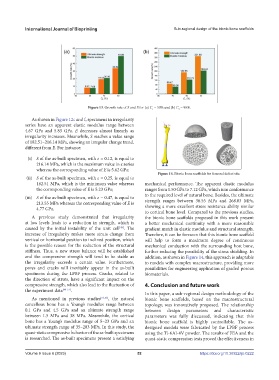
                                       Figure 13. Growth rate of S and E for (a) C  = 50% and (b) C  = 90%.
                                                                  1
                                                                             2
               As shown in Figure 12c and f, specimens in irregularity
            series have an apparent elastic modulus range between
            4.67 GPa and 5.83 GPa.  E decreases almost linearly as
            irregularity increases. Meanwhile, S reaches a value range
            of 182.51–216.14 MPa, showing an irregular change trend,
            different from E. For instance:

              (i)  S of the as-built specimen, with ε = 0.12, is equal to
                 216.14 MPa, which is the maximum value in ε series
                 whereas the corresponding value of E is 5.62 GPa;
                                                                    Figure 14. Bionic bone scaffolds for femoral defect site.
             (ii)  S of the as-built specimen, with ε = 0.25, is equal to
                 182.51 MPa, which is the minimum value whereas   mechanical performance. The apparent elastic modulus
                 the corresponding value of E is 5.23 GPa;     ranges from 1.50 GPa to 7.12 GPa, which is in conformance
             (iii)  S of the as-built specimen, with ε = 0.47, is equal to   to the required level of natural bone. Besides, the ultimate
                 213.55 MPa whereas the corresponding value of E is   strength ranges between 38.55 MPa and 268.03 MPa,
                 4.77 GPa.                                     showing a more excellent stress resistance ability similar
                                                               to cortical bone level. Compared to the previous studies,
               A previous study demonstrated that irregularity   the bionic bone scaffolds proposed in this work present
            at low levels leads to a reduction in strength, which is   a better mechanical continuity with a more reasonable
            caused by the initial instability of the unit cell . The   gradient match in elastic modulus and structural strength.
                                                    [48]
            increase of irregularity makes more struts change from   Therefore, it can be foreseen that this bionic bone scaffold
            vertical or horizontal position to inclined position, which   will help to form a maximum degree of continuous
            is the possible reason for the reduction of the structural   mechanical conduction with the surrounding host bone,
            stiffness. Thus, a new stress balance will be established   further reducing the possibility of the stress shielding. In
            and the compressive strength will tend to be stable as   addition, as shown in Figure 14, this approach is adaptable
            the irregularity exceeds a certain value. Furthermore,   to models with complex macrostructure, providing more
            pores and cracks will inevitably appear in the as-built   possibilities for engineering application of graded porous
            specimens during the LPBF process. Cracks, related to   biomaterials.
            the  direction  of  struts,  have  a  significant  impact  on  the
            compressive strength, which also lead to the fluctuation of   4. Conclusion and future work
            the experiment data [49-51] .
                                                               In this paper, a sub-regional design methodology of the
               As mentioned in previous studies [52,53] , the natural   bionic bone scaffolds, based on the macrostructural
            cancellous  bone  has  a  Young’s  modulus  range  between   topology, was innovatively proposed. The relationship
            0.1  GPa and 4.5 GPa and an ultimate strength range   between  design  parameters  and  characteristic
            between 1.5 MPa and 38 MPa. Meanwhile, the cortical   parameters was fully discussed, indicating that this
            bone has a Young’s modulus range of 5–23 GPa and an   bionic bone scaffold is highly controllable. The as-
            ultimate strength range of 35–283 MPa. In this study, the   designed models were fabricated by the LPBF process
            quasi-static compressive behavior of the as-built specimens   using the Ti-6Al-4V powder. The results of FEA and the
            is researched. The as-built specimens present a satisfying   quasi-static compression tests proved the effectiveness in


            Volume 9 Issue 6 (2023)                         52                        https://doi.org/10.36922/ijb.0222

