


Page 550 - IJB-9-6
P. 550
International Journal of Bioprinting                            3D printing of PCL-ceramic composite scaffolds


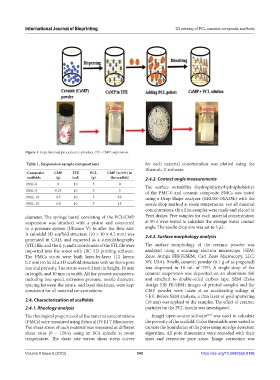
            Figure 1. Experimental procedure to produce PCL-CMP suspension.

            Table 1. Suspension sample compositions            for  each  material  concentration  was  plotted  using  the
                                                               Rheocalc T software.
             Composite   CMP    TFE    PCL     CMP (w/w%) in
             scaffolds   (g)    (ml)    (g)     the scaffold   2.4.2. Contact angle measurements
            PMC-0        0      10      5           0          The surface wettability (hydrophilicity/hydrophobicity)
            PMC-5        0.25   10      5           5          of the PMC-0 and ceramic composite PMCs was tested
            PMC-10       0.5    10      5          10          using a Drop Shape analyzer (KRUSS-DSA25E) with the
            PMC-15       1.0    10      5          15          sessile drop method at room temperature. For all material
                                                               concentrations, thin film samples were made and placed in
            diameter. The syringe barrel consisting of the PCL/CMP   Petri dishes. Five samples for each material concentration
            suspension was attached with a piston and connected   at 90 s were tested to calculate the average water contact
            to a pressure system (Ultimus V) to alter the flow rate.   angle. The sessile drop size was set to 5 μL.
            A cuboidal 3D scaffold structure (10 × 10 × 0.2 mm) was   2.4.3. Surface morphology analysis
            generated in CAD, and exported as a stereolithography
            (STL) file, and the x, y, and z coordinates of the STL file were   The  surface  morphology  of  the  ceramic  powder  was
            imported into the robot with JRC 3D printing software.   analyzed  using  a scanning electron  microscope  (SEM;
            The PMCs struts were built layer-by-layer (12 layers:   Zeiss Auriga FIB/FESEM, Carl Zeiss Microscopy, LLC,
            0.2 mm) to build a 3D scaffold structure with uniform pore   NY, USA). Briefly, ceramic powder (0.1 g of as-prepared)
            size and porosity. The struts were 0.2 mm in height, 10 mm   was dispersed in  10  mL  of TFE. A  single  drop of the
            in length, and 10 mm in width. All the process parameters,   ceramic  suspension  was  deposited  on  an  aluminum  foil
            including line speed, extrusion pressure, nozzle diameter,   and attached to double-sided carbon tape. SEM (Zeiss
            spacing between the struts, and layer thickness, were kept   Auriga FIB FE-SEM) images of printed samples and the
            consistent for all material concentrations.        CMP powder were taken at an accelerating voltage of
                                                               5 kV. Before SEM analysis, a thin layer of gold sputtering
            2.4. Characterization of scaffolds                 (10 nm) was applied to the samples. The effect of ceramic
            2.4.1. Rheology analysis                           particles on the PCL matrix was investigated.
            The rheological properties of all the material concentrations   ImageJ open-source software  was used to calculate
                                                                                         [57]
            (PMCs) were measured using Rehocal DVIII T Rheometer.   the porosity of the scaffold. Color thresholds were varied to
            The shear stress of each material was measured at different   capture the boundaries of the pores using an edge detection
            shear rates (0 – 120/s) using an SC4 spindle at room   algorithm. All pore dimensions were recorded with their
            temperature. The shear rate versus shear stress curves   sizes and respective pore areas. Image correction was


            Volume 9 Issue 6 (2023)                        542                         https://doi.org/10.36922/ijb.0196

