


Page 551 - IJB-9-6
P. 551
International Journal of Bioprinting                            3D printing of PCL-ceramic composite scaffolds


                         A


                         B                                      C


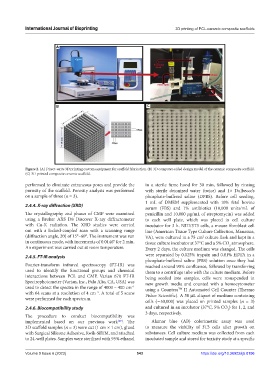
            Figure 2. (A) Direct-write 3D printing custom equipment for scaffold fabrication. (B) 3D computer-aided design model of the ceramic composite scaffold.
            (C) 3D-printed composite ceramic scaffold.
            performed to eliminate extraneous pores and provide the   in a sterile fume hood for 30  min, followed by rinsing
            porosity of the scaffold. Porosity analysis was performed   with sterile deionized water (twice) and 1×  Dulbecco’s
            on a sample of three (n = 3).                      phosphate-buffered saline (DPBS). Before cell seeding,
                                                               1  mL of DMEM supplemented with 10% fetal bovine
            2.4.4. X-ray diffraction (XRD)
                                                               serum (FBS) and 1% antibiotics (10,000 units/mL of
            The crystallography and phases of CMP were examined   penicillin and 10,000 μg/mL of streptomycin) was added
            using a Bruker AXS D8 Discover X-ray diffractometer   to each well plate, which was placed in cell culture
            with Cu-K radiation. The XRD studies were carried   incubator for 3 h. NIH/3T3 cells, a mouse fibroblast cell
            out with a locked-coupled scan with a scanning range   line (American Tissue Type Culture Collection, Manassas,
            (diffraction angle, 2θ) of 15°–60°. The instrument was run   VA), were cultured in a 75 cm  culture flask and kept in a
                                                                                       2
            in continuous mode, with increments of 0.0146° for 2 min.   tissue culture incubator at 37°C and a 5% CO  atmosphere.
                                                                                                   2
            An experiment was carried out at room temperature.  Every 2 days, the culture medium was changed. The cells
            2.4.5. FT-IR analysis                              were separated by 0.025% trypsin and 0.01% EDTA in a
                                                               phosphate-buffered saline  (PBS) solution once  they  had
            Fourier-transform infrared spectroscopy (FT-IR)  was   reached around 90% confluence, followed by transferring
            used to identify the functional groups and chemical   them to a centrifuge tube with the culture medium. Before
            interactions  between  PCL  and  CMP.  Varian  670  FT-IR   being seeded into samples, cells were resuspended in
            Spectrophotometer (Varian, Inc., Palo Alto, CA, USA) was   new growth media and counted with a hemocytometer
            used to detect the spectra in the range of 4000 – 400 cm    using a Countess  II Automated Cell Counter (Thermo
                                                         −1
                                                                             TM
            with 64 scans at a resolution of 4 cm . A total of 5 scans   Fisher Scientific). A 50 μL aliquot of medium containing
                                          −1
            were performed for each spectrum.
                                                               cells (∼50,000) was placed on printed samples (n = 3)
            2.4.6. Biocompatibility study                      and cultured in an incubator (37°C, 5% CO ) for 1, 2, and
                                                                                                  2
                                                               3 days, respectively.
            The procedure to conduct biocompatibility was
            implemented based on our previous work . The         Alamar blue (AB) colorimetric assay was used
                                                   [29]
            3D scaffold samples (n = 3) were cut (1 cm × 1 cm), glued   to measure the viability of 3T3  cells after growth on
            with Surgical Silicone Adhesive, Kwik-SilTM, and attached   substances. Cell culture medium was collected from each
            to 24-well plates. Samples were sterilized with 95% ethanol   incubated sample and stored for toxicity study at a specific
            Volume 9 Issue 6 (2023)                        543                         https://doi.org/10.36922/ijb.0196

