


Page 88 - IJB-9-6
P. 88
International Journal of Bioprinting                                     Review of 3D bioprinted organoids


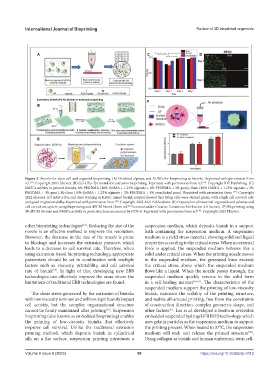
            Figure 2. Bioinks for stem cell and organoid bioprinting. (A) Oxidized alginate and ADSCs for bioprinting as bioinks. Reprinted with permission from
                                                                                       [38]
              [36]
            ref. . Copyright 2014 Elsevier. (B) Gel-UPy-Tyr bioink for extrusion bioprinting. Reprinted with permission from ref. . Copyright IOP Publishing. (C)
            hMSCs activity in printed bioinks, 0% PEGDMA (10% GelMA + 1.25% alginate + 0% PEGDMA + 3% gum), Gum (10% GelMA + 1.25% alginate + 2%
            PEGDMA + 3% gum), M-Gum (10% GelMA + 1.25% alginate + 2% PEGDMA + 3% crosslinked gum). Reprinted with permission from  [39] . Copyright
            2022 Elsevier. (D) hASCs live and dead staining in KEGC mixed bioink printed showed that living cells were stained green, with a high cell survival rate
                                                  [40]
            and good migration ability. Reprinted with permission from  . Copyright 2023 ACS Publications. (E) Preparation of intestinal organoids and submucosal
            cell co-culture system using bioprinting and dECM bioink (from ref.  licensed under Creative Commons Attribution 4.0 license). (F) Bioprinting using
                                                        [47]
            SF-dECM bioinks and BMSCs activity in print structures measured by CCK-8. Reprinted with permission from ref. . Copyright 2023 Elsevier.
                                                                                     [48]
            other bioprinting technologies . Reducing the size of the   suspension medium, which deposits bioink in a support
                                    [16]
            nozzle is an effective method to improve the resolution.   bath containing the suspension medium. A suspension
            However, the decrease in the size of the nozzle is prone   medium is a yield stress material, showing solid and liquid
            to blockage and increases the extrusion pressure, which   properties according to the critical stress. When no external
            leads to a decrease in cell survival rate. Therefore, when   force  is  applied,  the  suspended  medium behaves  like  a
            using extrusion-based bioprinting technology, appropriate   solid under critical stress. When the printing nozzle moves
            parameters should be set in combination with multiple   in the suspended medium, the generated force exceeds
            factors such as viscosity, printability, and cell survival   the critical stress, above which the suspended medium
            rate of bioink . In light of this, developing new EBB   flows like a liquid. When the nozzle passes through, the
                       [54]
            technologies can effectively improve the areas where the   suspended medium quickly returns to the solid form
            limitations of traditional EBB technologies are found.  in a self-healing manner [56,57] . The characteristics of the
                                                               suspended medium support the printing of low-viscosity
               The shear stress generated by the extrusion of bioinks   bioink, maintain the stability of the printing structure,
            with low viscosity is minor and will not significantly impact   and realize all-around printing, free from the constraints
            cell activity, but the complex organizational structure   of construction direction, complex geometric shape, and
            cannot be firmly maintained after printing . Suspension   other factors . Lee et al. developed a freeform reversible
                                              [55]
                                                                         [57]
            bioprinting (also known as embedded bioprinting) enables   embedded suspended hydrogel (FRESH) technology, which
            the printing of low-viscosity bioinks that effectively   uses gelatin particles as the suspension medium to support
            improve cell survival. Unlike the traditional extrusion   the printing process. When heated to 37°C, the suspension
            printing method, which deposits bioink in cylindrical   medium will melt and release the printed structure .
                                                                                                           [58]
            silk on a flat surface, suspension printing introduces a   Using collagen as bioink and human embryonic stem cell-

            Volume 9 Issue 6 (2023)                         80                         https://doi.org/10.36922/ijb.0112

