


Page 200 - IJOCTA-15-1
P. 200
H.H. Yildirim, A. Akusta / IJOCTA, Vol.15, No.1, pp.183-201 (2025)
                    Table 4. Variables and acronyms
                    used in the research

              Acronyms       Variables          Variable Type
              vol            Volatility         Dependent Variable
              co             Current Ratio
              bo             Leverage Ratio ( Borrowing Ratio)
              adh            Asset Turnover Ratio
              roa            Return on Assets   Independent Variable
              roe            Return on Equity
              pddd           Market Value / Book Value
              beta           Firm Beta
              Sources: Authors’ Finding.


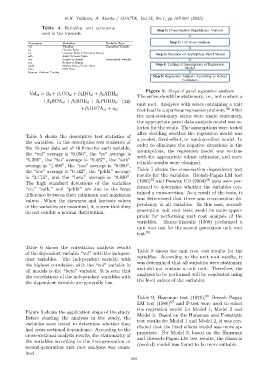
                                                                  Figure 3. Steps of panel regression analysis
              Vol it = β 0 + β 1 CO it + β 2 BO it + β 3 ADH it
                                                              The series should be stationary, i.e., not contain a
                    +β 4 ROA it + β 5 ROE it + β 6 PDDD it (34)
                                                              unit root. Analyses with series containing a unit
                                     +β 7 BETA it + u it                                             56
                                                              root lead to a spurious regression problem.  After
                                                              the non-stationary series were made stationary,
                                                              the appropriate panel data analysis model was se-
                                                              lected for the study. The assumptions were tested
                                                              after deciding whether the regression model was
            Table 5 shows the descriptive test statistics of
                                                              a pooled, fixed-effect, or random-effect model. In
            the variables. In the descriptive test statistics of
                                                              order to eliminate the negative situations in the
            the 18-year data set of 46 firms for each variable,
                                                              assumptions, the regression model was re-done
            the “vol” average is “0.056”, the “co” average is
                                                              with the appropriate robust estimator, and more
            “5.396”, the “bo” average is “0.487”, the “adh”
                                                              reliable results were obtained.
            average is “1.090”, the “roa” average is “0.080”,
                                                              Table 7 shows the cross-section dependency test
            the “roe” average is “0.142”, the “pddd” average
                                                              results for the variables. Breush-Pagan LM test
            is “3.173”, and the “beta” average is “0.830”.          57                       58
                                                              (1980)  and Pesaran CD (2004)    tests were per-
            The high standard deviations of the variables
                                                              formed to determine whether the variables con-
            “co,” “adh,” and “pddd” are due to the large
                                                              tained a cross-section. As a result of the tests, it
            difference between their minimum and maximum
                                                              was determined that there was cross-section de-
            values. When the skewness and kurtosis values
                                                              pendency in all variables. In this case, second-
            of the variables are examined, it is seen that they
            do not exhibit a normal distribution.             generation unit root tests would be more appro-
                                                              priate for performing unit root analysis of the
                                                              variables.  Harris-Tzavalis (1999) performed a
                                                              unit root test for the second generation unit root
                                                              test. 59
            Table 6 shows the correlation analysis results
                                                              Table 8 shows the unit root test results for the
            of the dependent variable “vol” with the indepen-
                                                              variables. According to the unit root results, it
            dent variables. The independent variable with
                                                              was determined that all variables were stationary
            the highest correlation with the “vol” variable in
                                                              and did not contain a unit root. Therefore, the
            all models is the “beta” variable. It is seen that
                                                              analyses to be performed will be conducted using
            the correlations of the independent variables with
                                                              the level values of the variables.
            the dependent variable are generally low.
                                                              Table 9, Hausman test (1978), 60  Breush Pagan
                                                              LM test (1980) 57  and F-test were used to select
                                                              the regression model for Model 1, Model 2 and
            Figure 3 shows the application steps of the study.
                                                              Model 3. Based on the Hausman and F-statistic
            Before starting the analysis in the study, the
                                                              test results for Model 1 and Model 2, it was con-
            variables were tested to determine whether they
                                                              cluded that the fixed effects model was more ap-
            had cross-sectional dependence. According to the
                                                              propriate. For Model 3, based on the Hausman
            cross-sectional analysis results, the stationarity of
                                                              and Breusch-Pagan LM test results, the classical
            the variables according to the first-generation or
                                                              (pooled) model was found to be more suitable.
            second-generation unit root analyses was exam-
            ined.
                                                           194

