


Page 20 - IJOCTA-15-3
P. 20
A. Kaveh, M. Vahedi, M. Gandomkar / IJOCTA, Vol.15, No.3, pp.379-395 (2025)
            oscillations with significant changes in the rate of  of absolute error values indicates a significant in-
            change of the third state variable(Omega − dot)   crease in the state regulation error in the conven-
            over time occur under the sliding mode control    tional SMC method compared to Table 1, while
            method, which can be destructive for the fre-     this increase is only 0.05 in the proposed method.
            quency regulation of the system. However, these   In the section on the rate of change in the state
            issues are not present in the proposed method.    regulation error, the state regulation error value
            These observations highlight the superiority of the  in the conventional SMC method has increased
            proposed method in regulating the state rates of  by one unit compared to Table 1, while this in-
            the BLDC system with smoother and more sta-       crease is only 0.007 in the proposed method. This
            ble behavior compared to the sliding mode control  demonstrates the significant advantage and resis-
            method.                                           tance of the proposed FO-SMC method compared
                                                              to the already robust conventional sliding mode
                                                              method, which is itself preferable to, for example,
                                                              the PID method.

                                                                  In general, the superiority of SMC over PID
                                                              and FO-SMC over FOPID in controlling chaotic
                                                              BLDC motor systems can be justified based on
                                                              several critical performance factors. SMC pro-
                                                              vides robust control under parameter uncertain-
                                                              ties and external disturbances, ensuring stable op-
                                                              eration where PID controllers require continuous
                                                              tuning and struggle with nonlinearities inherent
                                                              in BLDC motors. Additionally, SMC guarantees
                                                              finite-time convergence, whereas PID controllers
                                                              only achieve asymptotic stability, often result-
                                                              ing in longer settling times and susceptibility to
                                                              steady-state errors.
                                                                  On the other hand, FO-SMC further im-
                                                              proves upon SMC by reducing the chattering ef-
                                                              fect, which is a major issue in conventional slid-
                                                              ing mode controllers. The fractional-order na-
                                                              ture of FO-SMC introduces memory effects, of-
                                                              fering greater flexibility in parameter tuning and
                                                              enhanced adaptability to system variations. This
                                                              results in a smoother control action and improved
                                                              dynamic response compared to FOPID, which,
                                                              despite its fractional-order terms, still relies on
                                                              PID-based tuning strategies that can be computa-
                                                              tionally expensive and sensitive to high-frequency
                                                              oscillations.
                                                                  The comparative analysis confirms that FO-
                                                              SMC is the most effective approach for chaotic
                                                              BLDC motor control, as it provides higher stabil-
                                                              ity, faster response times, and greater resilience
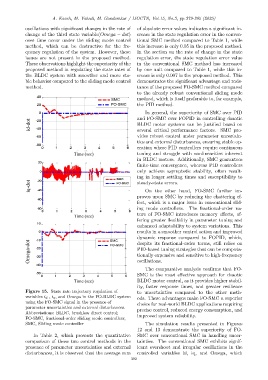
            Figure 15. State rate trajectory regulation of    to uncertainties compared to the other meth-
            variables i d , i q , and Omega in the FO-BLDC system  ods. These advantages make FO-SMC a superior
            using the FO-SMC signal in the presence of        choice for real-world BLDC applications requiring
            parameter uncertainties and external disturbances.  precise control, reduced energy consumption, and
            Abbreviations: BLDC, brushless direct control;    improved system reliability.
            FO-SMC, fractional-order sliding mode controllers;
            SMC, Sliding mode controller                          The simulation results presented in Figures
                                                              12 and 13 demonstrate the superiority of FO-
                In Table 2, which presents the quantitative   SMC over conventional SMC in handling uncer-
            comparison of these two control methods in the    tainties. The conventional SMC exhibits signif-
            presence of parameter uncertainties and external  icant overshoot and irregular oscillations in the
            disturbances, it is observed that the average sum  controlled variables id, iq, and Omega, which
                                                           392

