


Page 17 - IJOCTA-15-3
P. 17
Improving the performance of a chaotic nonlinear system of fractional-order...
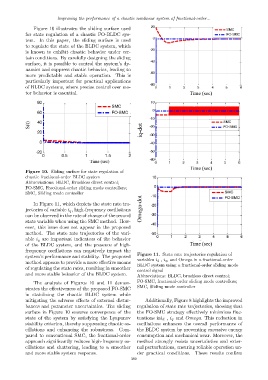
                Figure 10 illustrates the sliding surface used
            for state regulation of a chaotic FO-BLDC sys-
            tem. In this paper, the sliding surface is used
            to regulate the state of the BLDC system, which
            is known to exhibit chaotic behavior under cer-
            tain conditions. By carefully designing the sliding
            surface, it is possible to control the system’s dy-
            namics and suppress chaotic behavior, leading to
            more predictable and stable operation. This is
            particularly important for practical applications
            of BLDC systems, where precise control over mo-
            tor behavior is essential.


            Figure 10. Sliding surface for state regulation of
            chaotic fractional-order BLDC system
            Abbreviations: BLDC, Brushless direct control;
            FO-SMC, Fractional-order sliding mode controllers;
            SMC, Sliding mode controller

                In Figure 11, which depicts the state rate tra-
            jectories of variable i q , high-frequency oscillations
            can be observed in the rate of change of the second
            state variable when using the SMC method. How-
            ever, this issue does not appear in the proposed
            method. The state rate trajectories of the vari-
            able i q are important indicators of the behavior
            of the BLDC system, and the presence of high-
            frequency oscillations can negatively impact the
                                                              Figure 11. State rate trajectories regulation of
            system’s performance and stability. The proposed
                                                              variables i d , i q , and Omega in a fractional-order
            method appears to provide a more effective means
                                                              BLDC system using a fractional-order sliding mode
            of regulating the state rates, resulting in smoother
                                                              control signal
            and more stable behavior of the BLDC system.
                                                              Abbreviations: BLDC, brushless direct control;
                The analysis of Figures 10 and 11 demon-      FO-SMC, fractional-order sliding mode controllers;
                                                              SMC, Sliding mode controller
            strates the effectiveness of the proposed FO-SMC
            in stabilizing the chaotic BLDC system while
            mitigating the adverse effects of external distur-    Additionally, Figure 8 highlights the improved
            bances and parameter uncertainties. The sliding   regulation of state rate trajectories, showing that
            surface in Figure 10 ensures convergence of the   the FO-SMC strategy effectively minimizes fluc-
            state of the system by satisfying the Lyapunov    tuations ini d , i q and Omega. This reduction in
            stability criterion, thereby suppressing chaotic os-  oscillations enhances the overall performance of
            cillations and enhancing the robustness. Com-     the BLDC system by preventing excessive energy
            pared to conventional SMC, the fractional-order   consumption and mechanical wear. Moreover, the
            approach significantly reduces high-frequency os-  method strongly resists uncertainties and exter-
            cillations and chattering, leading to a smoother  nal perturbations, ensuring reliable operation un-
            and more stable system response.                  der practical conditions. These results confirm
                                                           389

