


Page 123 - IJOCTA-15-4
P. 123
Rolling bearing fault diagnosis method based on GJO–VMD, multiscale fuzzy entropy, and GSABO–BP...


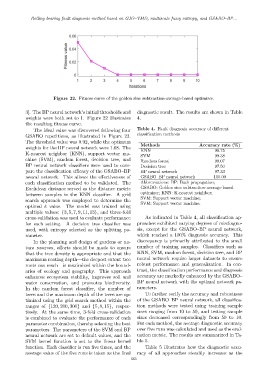
                         Figure 22. Fitness curve of the golden sine subtraction-average-based optimizer.

            3]. The BP neural network’s initial thresholds and  diagnostic result. The results are shown in Table
            weights were both set to 1. Figure 22 illustrates  4.
            the resulting fitness curve.
                The ideal value was discovered following four  Table 4. Fault diagnosis accuracy of different
                                                              classification methods
            GSABO repetitions, as illustrated in Figure 22.
            The threshold value was 0.92, while the optimum
                                                               Methods                    Accuracy rate (%)
            weights for the BP neural network were 1.08. The
                                                               KNN                              98.75
            K-nearest neighbor (KNN), support vector ma-
                                                               SVM                              99.38
            chine (SVM), random forest, decision tree, and     Random forest                    99.07
            BP neural network classifiers were used to com-    Decision tree                    97.50
            pare the classification efficacy of the GSABO–BP   BP neural network                97.33
            neural network. This allows the effectiveness of   GSABO–BP neural network          100.00
            each classification method to be validated. The    Abbreviations: BP: Back propagation;
            Euclidean distance served as the distance metric   GSABO: Golden sine subtraction-average-based
                                                               optimizer; KNN: K-nearest neighbor;
            between samples in the KNN classifier. A grid
                                                               SVM: Support vector machine;
            search approach was employed to determine the
                                                               SVM: Support vector machine.
            optimal k value. The model was trained using
            multiple values: {3, 5, 7, 9, 11, 13}, and three-fold
            cross-validation was used to evaluate performance     As indicated in Table 4, all classification ap-
            for each setting. A decision tree classifier was  proaches exhibited varying degrees of misdiagno-
            used, with entropy selected as the splitting pa-  sis, except for the GSABO–BP neural network,
            rameter.                                          which reached a 100% diagnosis accuracy. This
                In the planning and design of gardens or na-  discrepancy is primarily attributed to the small
            ture reserves, efforts should be made to ensure   number of training samples. Classifiers such as
            that the tree density is appropriate and that the  KNN, SVM, random forest, decision tree, and BP
            maximum rooting depth—the deepest extent tree     neural network require larger datasets to ensure
            roots can reach—is maximized within the bound-    robust performance and generalization. In con-
            aries of ecology and geography. This approach     trast, the classification performance and diagnosis
            enhances ecosystem stability, improves soil and   accuracy are markedly enhanced by the GSABO–
            water conservation, and promotes biodiversity.    BP neural network with the optimal network pa-
            In the random forest classifier, the number of    rameters.
            trees and the maximum depth of the trees are op-      To further verify the accuracy and robustness
            timized using the grid search method within the   of the GSABO–BP neural network, all classifica-
            ranges of {120, 200, 300} and {5, 8, 15}, respec-  tion methods were tested using training sample
            tively. At the same time, 3-fold cross-validation  sizes ranging from 10 to 50, and testing sample
            is combined to evaluate the performance of each   sizes decreased correspondingly from 50 to 10.
            parameter combination, thereby selecting the best  For each method, the average diagnostic accuracy
            parameters. The parameters of the SVM and BP      over five runs was calculated and used as the eval-
            neural network are set to default values, and the  uation metric. The results are summarized in Ta-
            SVM kernel function is set to the linear kernel   ble 5.
            function. Each classifier is run five times, and the  Table 5 illustrates how the diagnostic accu-
            average value of the five runs is taken as the final  racy of all approaches steadily increases as the
                                                           665

