


Page 119 - IJOCTA-15-4
P. 119
Rolling bearing fault diagnosis method based on GJO–VMD, multiscale fuzzy entropy, and GSABO–BP...


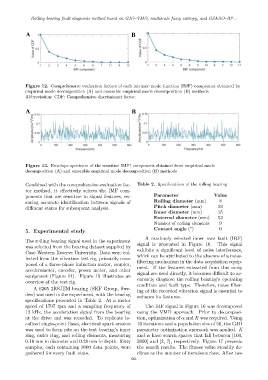
            Figure 12. Comprehensive evaluation factors of each intrinsic mode function (IMF) component obtained by
            empirical mode decomposition (A) and ensemble empirical mode decomposition (B) methods
            Abbreviation: CDF: Comprehensive discriminant factor.


            Figure 13. Envelope spectrum of the sensitive IMF1 component obtained from empirical mode
            decomposition (A) and ensemble empirical mode decomposition (B) methods


            Combined with the comprehensive evaluation fac-   Table 2. Specifications of the rolling bearing
            tor method, it effectively selects the IMF com-
            ponents that are sensitive to signal features, en-       Parameter                  Value
            suring accurate identification between signals of        Rolling diameter (mm)        8
            different states for subsequent analysis.                Pitch diameter (mm)          39
                                                                     Inner diameter (mm)          25
                                                                     External diameter (mm)       52
                                                                     Number of rolling elements   9
                                                                                     ◦
                                                                     Contact angle ( )            0
            5. Experimental study
                                                                  A randomly selected inner race fault (IRF)
            The rolling bearing signal used in the experiment
                                                              signal is presented in Figure 16.   This signal
            was selected from the bearing dataset supplied by
            Case Western Reserve University. Data were col-   exhibits a significant level of noise interference,
            lected from the vibration test rig, primarily com-  which can be attributed to the absence of a noise-
            posed of a three-phase induction motor, coupler,  filtering mechanism in the data acquisition equip-
            accelerometer, encoder, power meter, and other    ment. If the features extracted from this noisy
            equipment (Figure 14). Figure 15 illustrates an   signal are used directly, it becomes difficult to ac-
            overview of the test rig.                         curately diagnose the rolling bearing’s operating
                                                              condition and fault type. Therefore, noise filter-
                A 6205 2RSJEM bearing (SKF Group, Swe-        ing of the recorded vibration signal is essential to
            den) was used in the experiment, with the bearing  enhance its features.
            specifications presented in Table 2. At a motor
            speed of 1797 rpm and a sampling frequency of         The IRF signal in Figure 16 was decomposed
            12 kHz, the acceleration signal from the bearing  using the VMD approach. Prior to decomposi-
            at the drive end was recorded. To replicate lo-   tion, optimization of α and K was required. Using
            calized single-point flaws, electrical spark erosion  10 iterations and a population size of 50, the GJO
            was used to form pits on the test bearing’s inner  parameter optimization approach was applied. K
            ring, outer ring, and rolling elements, measuring  and α have search spaces that fall between [100,
            0.18 mm in diameter and 0.28 mm in depth. Sixty   5000] and [2, 7], respectively. Figure 17 presents
            samples, each containing 3000 data points, were   the search results. The fitness value steadily de-
            gathered for every fault state.                   clines as the number of iterations rises. After two
                                                           661

