


Page 121 - IJOCTA-15-4
P. 121
Rolling bearing fault diagnosis method based on GJO–VMD, multiscale fuzzy entropy, and GSABO–BP...


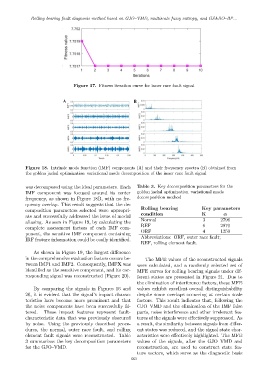
                                  Figure 17. Fitness iteration curve for inner race fault signal


            Figure 18. Intrinsic mode function (IMF) components (A) and their frequency spectra (B) obtained from
            the golden jackal optimization–variational mode decomposition of the inner race fault signal

            was decomposed using the ideal parameters. Each   Table 3. Key decomposition parameters for the
            IMF component was focused around its center       golden jackal optimization–variational mode
            frequency, as shown in Figure 18B, with no fre-   decomposition method
            quency overlap. This result suggests that the de-
                                                                Rolling bearing            Key parameters
            composition parameters selected were appropri-
                                                                condition                  K        α
            ate and successfully addressed the issue of modal
                                                                Normal                     3       2796
            aliasing. As seen in Figure 19, by calculating the
                                                                REF                        6       2970
            complete assessment factors of each IMF com-
                                                                ORF                        4       1259
            ponent, the sensitive IMF component containing
                                                                Abbreviations: ORF, outer race fault;
            IRF feature information could be easily identified.
                                                                REF, rolling element fault.
                As shown in Figure 19, the largest difference
            in the comprehensive evaluation factors occurs be-    The MFE values of the reconstructed signals
            tween IMF1 and IMF2. Consequently, IMFX was       were calculated, and a randomly selected set of
            identified as the sensitive component, and its cor-  MFE curves for rolling bearing signals under dif-
            responding signal was reconstructed (Figure 20).  ferent states are presented in Figure 21. Due to
                                                              the elimination of interference factors, these MFE
                By comparing the signals in Figures 16 and    values exhibit excellent overall distinguishability
            20, it is evident that the signal’s impact charac-  despite some overlaps occurring at certain scale
            teristics have become more prominent and that     factors. This result indicates that, following the
            the noise components have been successfully fil-  GJO–VMD and the elimination of the IMF false
            tered.  These impact features represent fault-    parts, noise interference and other irrelevant fea-
            characteristic data that was previously obscured  tures of the signals were effectively suppressed. As
            by noise. Using the previously described proce-   a result, the similarity between signals from differ-
            dures, the normal, outer race fault, and rolling  ent states was reduced, and the signal state char-
            element fault signals were reconstructed. Table   acteristics were effectively highlighted. The MFE
            3 summarizes the key decomposition parameters     values of the signals, after the GJO–VMD and
            for the GJO–VMD.                                  reconstruction, are used to construct state fea-
                                                              ture vectors, which serve as the diagnostic basis
                                                           663

