


Page 228 - IJOCTA-15-4
P. 228
H. Kravitz et al. / IJOCTA, Vol.15, No.4, pp.750-778 (2025)


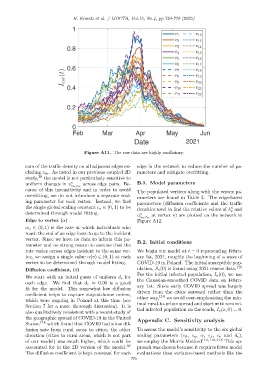
                                      Figure A11. The raw data are highly oscillatory.


            sum of the traffic density on all adjacent edges ex-  edge in the network to reduce the number of pa-
            cluding e m . As noted in our previous coupled 2D  rameters and mitigate overfitting.
            study, 30  the model is not particularly sensitive to
            uniform changes in v v    across edge pairs. Be-  B.1. Model parameters
                                e m,e n
            cause of this insensitivity and in order to avoid
                                                              The populated vertices along with the vertex pa-
            overfitting, we do not introduce a separate scal-
                                                              rameters are found in Table 3. The edge-based
            ing parameter for each vertex. Instead, we find
                                                              parameters (diffusion coefficients and the traffic
            the single global scaling constant c v ∈ (0, 1) to be                                       v
                                                              densities used to find the relative values of λ and
                                                                                                        e
            determined through model fitting.                  v
                                                              v     at vertex v) are plotted on the network in
                                                               e m,e n
            Edge to vertex (α)                                Figure A12.
            α v ∈ (0, 1) is the rate at which individuals who
            reach the end of an edge leave to go to the incident
            vertex. Since we have no data to inform this pa-  B.2. Initial conditions
            rameter and no strong reason to assume that the
            rate varies across edges incident to the same ver-  We begin our model at t = 0 representing Febru-
            tex, we assign a single value α(v) ∈ (0, 1) at each  ary 1st, 2021, roughly the beginning of a wave of
            vertex to be determined through model fitting.    COVID-19 in Poland. The initial susceptible pop-
            Diffusion coefficient, (d)                        ulation, S v (0) is found using 2021 census data. 115
                                                              For the initial infected population, I v (0), we use
            We start with an initial guess of uniform d e for
            each edge. We find that d e ≈ 0.09 is a good      the Gaussian-smoothed COVID data on Febru-
            fit for the model. This somewhat low diffusion    ary 1st. Since early COVID spread was largely
            coefficient helps to capture stay-at-home orders,  driven from the cities outward rather than the
                                                                        114
            which were ongoing in Poland at this time (see    other way,   we avoid over-emphasizing the min-
            Section 7 for a more thorough discussion). It is  imal rural-to-urban spread and start with zero ini-
            also qualitatively consistent with a recent study of  tial infected population on the roads, I e (x, 0) = 0.
            the geographic spread of COVID-19 in the United   Appendix C. Sensitivity analysis
            States. 114  which found that COVID had a low dif-
            fusion rate from rural areas to cities; the other  To assess the model’s sensitivity to the six global
            direction (cities to rural areas, which is not part  scaling parameters (c β , c η , α, c λ , c v and d e ),
            of our model) was much higher, which could be     we employ the Morris Method  110,116–118  This ap-
            accounted for in the 2D version of the model. 30  proach was chosen because it requires fewer model
            The diffusion coefficient is kept constant for each  evaluations than variance-based methods like the
                                                           770

