


Page 85 - IJOCTA-15-4
P. 85
Advanced frequency control strategy for power systems with high renewable energy penetration


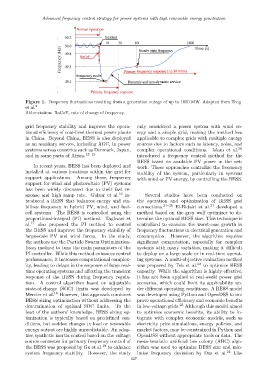
            Figure 1. Frequency fluctuations resulting from a generation outage of up to 1800 MW. Adapted from Teng
            et al. 2
            Abbreviation: RoCoF, rate of change of frequency.

            grid frequency stability and improve the opera-   only considered a power system with wind en-
            tional efficiency of coal-fired thermal power plants  ergy and a simple grid, making the method less
            in China. Beyond China, BESS is also deployed     applicable to complex grids with multiple energy
            as an auxiliary service, including AGC, in power  sources due to factors such as latency, noise, and
            systems across countries such as Denmark, Japan,  complex operational conditions.  Islam et al. 20
            and in some parts of Africa. 13–15                introduced a frequency control method for the
                                                              BESS based on available PV power in the net-
                In recent years, BESS has been deployed and   work. These approaches centralize the frequency
            installed at various locations within the grid for  stability of the system, particularly in systems
            support applications.  Among these, frequency     with wind or PV energy, by controlling the BESS.
            support for wind and photovoltaic (PV) systems
            has been widely discussed due to their fast re-
            sponse and high ramp rate. Gulzar et al.  16  in-     Several studies have been conducted on
            troduced a BESS that balances energy and sta-     the operation and optimization of BESS grid
            bilizes frequency in hybrid PV, wind, and fuel-   connections. 21–25  El-Bidairi et al. 21  developed a
            cell systems. The BESS is controlled using the    method based on the grey wolf optimizer to de-
            proportional-integral (PI) method. Taghvaei et    termine the optimal BESS size. This technique is
            al. 17  also proposed the PI method to control    centralized to examine the worst-case growth in
            the BESS and improve the frequency stability of   frequency fluctuations in electrical generation and
            large-scale PV and wind farms.    In the study,   consumption. However, the algorithm requires
            the authors use the Particle Swarm Optimization-  significant computation, especially for complex
            fuzzy method to tune the main parameters of the   systems with many variables, making it difficult
            PI controller. While this method enhances control  to deploy on a large scale or in real-time operat-
            performance, it increases computational complex-  ing systems. A multi-objective evaluation method
            ity, leading to delays in the response of large real-  was proposed by Teh et al. 22  to optimize BESS
            time operating systems and affecting the transient  capacity. While the algorithm is highly effective,
            response of the BESS during frequency regula-     it has not been applied to real-world power grid
            tion. A control algorithm based on adjustable     scenarios, which could limit its applicability un-
            state-of-charge (SOC) limits was developed by     der different operating conditions. A BESS model
            Mercier et al. 18  However, this approach combines  was developed using Python and OpenDSS to im-
            BESS sizing optimization without addressing the   prove operational efficiency and economic benefits
            determination of optimal SOC limits.    To the    in low-voltage grids. 23  Although this model aimed
            best of the authors’ knowledge, BESS sizing op-   to optimize economic benefits, its ability to in-
            timization is typically based on predefined con-  tegrate with complex economic models, such as
            ditions, but sudden changes in load or renewable  electricity price simulations, energy policies, and
            energy output are highly unpredictable. An adap-  market factors, may be constrained in Python and
            tive synthetic inertia control based on the voltage  OpenDSS without appropriate tools or data. The
            source converter for primary frequency control of  meta-heuristic artificial bee colony (ABC) algo-
            the BESS was proposed by Gu et al. 19  to enhance  rithm was used to optimize BESS size and min-
            system frequency stability. However, the study    imize frequency deviation by Das et al. 24  Like
                                                           627

