


Page 87 - IJOCTA-15-4
P. 87
Advanced frequency control strategy for power systems with high renewable energy penetration


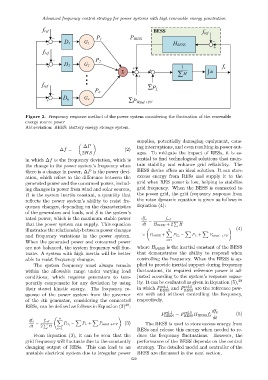
            Figure 2. Frequency response method of the power system considering the fluctuation of the renewable
            energy source power
            Abbreviation: BEES: Battery energy storage system.

                                                              supplies, potentially damaging equipment, caus-
                                      ∆P                      ing interruptions, and even resulting in power out-

                            ∆f = −                      (2)
                                     2HS                      ages. To mitigate the impact of RESs, it is es-
            in which ∆f is the frequency deviation, which is  sential to find technological solutions that main-
            the change in the power system’s frequency when   tain stability and enhance grid reliability. The
            there is a change in power, ∆P is the power devi-  BESS device offers an ideal solution. It can store
            ation, which refers to the difference between the  excess energy from RESs and supply it to the
            generated power and the consumed power, includ-   grid when RES power is low, helping to stabilize
            ing changes in power from wind and solar sources,  grid frequency. When the BESS is connected to
            H is the system inertia constant, a quantity that  the power grid, the grid frequency response from
            reflects the power system’s ability to resist fre-  the rotor dynamic equation is given as follows in
            quency changes, depending on the characteristics  Equation (4):
            of the generators and loads, and S is the system’s
            rated power, which is the maximum stable power      df s      f ref
                                                                   =          P
            that the power system can supply. This equation     dt   H BESS + 2  H
            illustrates the relationship between power changes             X       X       X           !  (4)
                                                                            n
            and frequency variations in the power system.       ×   P BESS +  P G i  −  P L +  P wind +PV
            When the generated power and consumed power                    i=1
            are not balanced, the system frequency will fluc-  where H BESS is the inertial constant of the BESS
            tuate. A system with high inertia will be better  that demonstrates the ability to respond when
            able to resist frequency changes.                 controlling the frequency. When the BESS is ap-
                The system frequency must always remain       plied to provide inertial support during frequency
            within the allowable range under varying load     fluctuations, its required reference power is ad-
            conditions, which requires generators to tem-     justed according to the system’s response capac-
            porarily compensate for any deviation by using    ity. It can be evaluated as given in Equation (5), 29
                                                                                   ref 0
                                                                        ref 1
            their stored kinetic energy.  The frequency re-   in which P BESS  and P BESS  are the reference pow-
            sponse of the power system from the governor      ers with and without controlling the frequency,
            of the ith generator, considering the connected   respectively.
                                                         28
            RESs, can be defined as follows in Equation (3) :
                                                                         P  ref 1  = P  ref 0  H BESS f s  df s  (5)
                                                      !                   BESS     BESS         dt
                           n
              df s  f ref  X       X      X
                 =  P        P G i  −  P L +  P wind +PV  (3)     The BESS is used to store excess energy from
              dt   2   H
                          i=1                                 RESs and release this energy when needed to re-
                From Equation (3), it can be seen that the    duce the frequency fluctuations. However, the
            grid frequency will fluctuate due to the constantly  performance of the BESS depends on the control
            changing output of RESs. This can lead to an      strategy. The detailed model and controller of the
            unstable electrical system due to irregular power  BESS are discussed in the next section.
                                                           629

