


Page 9 - IJOCTA-15-4
P. 9
Control strategies and power converter topologies for switched reluctance motors in electric...
            power density, low efficiency, and a complex cool-  smart charging hubs that incorporate vehicle-to-
            ing mechanism. PMSMs are medium in size and       grid technology, facilitating the stabilization of
            weight, provide a wide constant-torque range,     renewable energy grids through EVs while con-
            high power density, and high efficiency; however,  currently lowering charging expenses. SRMs are
            they are costly and require permanent magnets.    gaining recognition in motor technology as a vi-
            In contrast, SRMs are compact, low-cost, light-   able and economical substitute for PMSMs due
            weight, and have excellent fault tolerance and    to their robust design, inherent fault tolerance,
            overload capability.                              and the elimination of rare-earth materials in
                                                              their construction. 9,10,15  However, they demon-
                                                              strate an increased torque ripple ranging from
                                                              10% to 15% under traditional control methods,
                                                              alongside elevated acoustic noise levels that are
                                                              5–10 dB greater than those of PMSMs.  16  These
                                                              factors significantly influence the smoothness of
                                                              the drivetrain and the comfort of passengers.


                                                                  Notwithstanding these limitations, SRMs can
                                                              achieve overall vehicle efficiencies of 85–92% un-
                                                              der optimal control, owing to their reduced core
                                                              losses at high speeds and their ability to op-
                                                              erate over a wide speed range without field
                                                              weakening. 17  A significant challenge exists in in-
                                                              tegrating SRMs with regenerative braking sys-
                                                              tems due to the complexities introduced by their
                                                              nonlinear inductance profile, which hinders ac-
                                                              curate torque control during deceleration. Ad-
                                                              vanced strategies such as predictive torque con-
                                                              trol enhance regenerative energy recovery rates,
                                                              achieving efficiencies of 75–80%, in contrast to the
                                                              85–90% efficiency observed in PMSMs.  18  More-
                                                              over, the absence of standardized inverter–motor
                                                              interfaces in SRMs necessitates the development
                                                              of tailored power electronics, thereby augmenting
                                                              system complexity. Prospective advancements in
                                                              wide-bandgap semiconductor inverters and artifi-
                                                              cial intelligence (AI)-optimized torque-ripple sup-
                                                              pression have the potential to address existing
                                                              challenges, positioning SRMs as a competitive op-
                                                              tion for next-generation EVs.


                                                                  This paper presents a comprehensive review
                                                              of popular control technologies and power con-
                                                              verters utilized in SRM. The organization of the
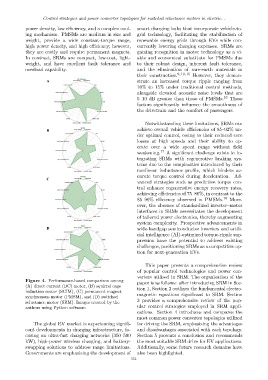
            Figure 4. Performance-based comparison among      paper is as follows: after introducing SRM in Sec-
            (A) direct current (DC) motor, (B) squirrel cage  tion 1, Section 2 outlines the fundamental electro-
            induction motor (SCIM), (C) permanent magnet      magnetic equations significant to SRM. Section
            synchronous motor (PMSM), and (D) switched
            reluctance motor (SRM). Images created by the     3 provides a comprehensive review of the pop-
            authors using Python software.                    ular control strategies employed in SRM appli-
                                                              cations. Section 4 introduces and compares the
                                                              most common power converter topologies utilized
                The global EV market is experiencing signifi-  for driving the SRM, emphasizing the advantages
            cant developments in charging infrastructure, fo-  and disadvantages associated with each topology.
            cusing on ultra-fast charging networks (350–500   Section 5 presents a conclusion and recommends
            kW), high-power wireless charging, and battery-   the most suitable SRM drive for EV applications.
            swapping solutions to address range limitations.  Additionally, some future research domains have
            Governments are emphasizing the development of    also been highlighted.
                                                           551

