


Page 14 - IJOCTA-15-4
P. 14
M. A. Aman et al. / IJOCTA, Vol.15, No.4, pp.549-577 (2025)


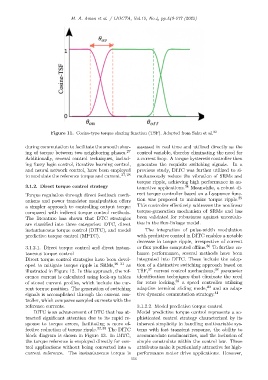
                        Figure 11. Cosine-type torque sharing function (TSF). Adapted from Sahu et al. 22


            during commutation to facilitate the smooth shar-  assessed in real time and utilized directly as the
            ing of torque between two neighboring phases. 27  control variable, thereby eliminating the need for
            Additionally, several control techniques, includ-  a current loop. A torque hysteresis controller then
            ing fuzzy logic control, iterative learning control,  generates the requisite switching signals.  In a
            and neural network control, have been employed    previous study, DITC was further utilized to si-
            to modulate the reference torque and current. 27,28  multaneously reduce the vibration of SRMs and
                                                              torque ripple, achieving high performance in au-
            3.1.2. Direct torque control strategy             tomotive applications. 34  Meanwhile, a robust di-

            Torque regulation through direct feedback mech-   rect torque controller based on a Lyapunov func-
                                                                                                           35
            anisms and power transistor manipulation offers   tion was proposed to minimize torque ripple.
            a simpler approach to controlling output torque   This controller effectively addresses the nonlinear
            compared with indirect torque control methods.    torque-generation mechanism of SRMs and has
            The literature has shown that DTC strategies      been validated for robustness against uncertain-
            are classified into three categories: DTC, direct  ties in the flux-linkage model.
            instantaneous torque control (DITC), and model        The integration of pulse-width modulation
            predictive torque control (MPTC).                 with predictive control in DITC enables a notable
                                                              decrease in torque ripple, irrespective of current
            3.1.2.1. Direct torque control and direct instan-  or flux profiles computed offline. 36  To further en-
            taneous torque control                            hance performance, several methods have been
            Direct torque control strategies have been devel-  integrated into DITC. These include the adop-
            oped to mitigate torque ripple in SRMs, 29–31  as  tion of a distinctive switching approach based on
            illustrated in Figure 12. In this approach, the ref-  TSF, 37  current control mechanisms, 38  parameter
            erence current is calculated using look-up tables  identification techniques that eliminate the need
            of stored current profiles, which include the cur-  for rotor locking, 39  a speed controller utilizing
            rent torque position. The generation of switching  adaptive terminal sliding mode, 40  and an adap-
            signals is accomplished through the current con-  tive dynamic commutation strategy. 41
            troller, which compares sampled currents with the
            reference currents.                               3.1.2.2. Model predictive torque control
                DITC is an advancement of DTC that has at-    Model predictive torque control represents a so-
            tracted significant attention due to its rapid re-  phisticated control strategy characterized by its
            sponse to torque errors, facilitating a more ef-  inherent simplicity in handling multivariable sys-
            fective reduction of torque ripple. 32,33  The DITC  tems with fast transient response, the ability to
            block diagram is shown in Figure 13. In DITC,     accommodate nonlinearities, and the inclusion of
            the torque reference is employed directly for con-  simple constraints within the control law. These
            trol applications without being converted into a  attributes make it particularly attractive for high-
            current reference. The instantaneous torque is    performance motor drive applications. However,
                                                           556

