


Page 17 - IJOCTA-15-4
P. 17
Control strategies and power converter topologies for switched reluctance motors in electric...


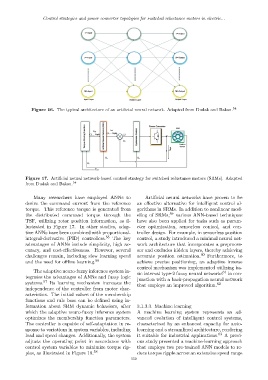
               Figure 16. The typical architecture of an artificial neural network. Adapted from Dudak and Bakan. 54


            Figure 17. Artificial neural network-based control strategy for switched reluctance motors (SRMs). Adapted
            from Dudak and Bakan. 54


                Many researchers have employed ANNs to            Artificial neural networks have proven to be
            derive the command current from the reference     an effective alternative for intelligent control al-
            torque. This reference torque is generated from   gorithms in SRMs. In addition to nonlinear mod-
            the distributed command torque through the        eling of SRMs, 59  various ANN-based techniques
            TSF, utilizing rotor position information, as il-  have also been applied for tasks such as param-
            lustrated in Figure 17. In other studies, adap-   eter optimization, sensorless control, and con-
            tive ANNs have been combined with proportional-   troller design. For example, in sensorless position
            integral-derivative (PID) controllers. 55  The key  control, a study introduced a minimal neural net-
            advantages of ANNs include simplicity, high ac-   work architecture that incorporates a preproces-
            curacy, and cost-effectiveness. However, several  sor and excludes hidden layers, thereby achieving
            challenges remain, including slow learning speed  accurate position estimation. 60  Furthermore, to
            and the need for offline learning. 56             achieve precise positioning, an adaptive inverse
                                                              control mechanism was implemented utilizing ba-
                The adaptive neuro-fuzzy inference system in-                                       61
                                                              sic interval type-2 fuzzy neural networks  in con-
            tegrates the advantages of ANNs and fuzzy logic   junction with a back-propagation neural network
            systems. 57  Its learning mechanism increases the  that employs an improved algorithm. 62
            independence of the controller from motor char-
            acteristics. The initial values of the membership
            functions and rule base can be defined using in-
            formation about SRM dynamic behaviors, after      3.1.3.3. Machine learning
            which the adaptive neuro-fuzzy inference system   A machine learning system represents an ad-
            optimizes the membership function parameters.     vanced evolution of intelligent control systems,
            The controller is capable of self-adaptation in re-  characterized by an enhanced capacity for auto-
            sponse to variations in system variables, including  learning and a streamlined architecture, rendering
            load and speed changes. Additionally, the system  it suitable for industrial applications. 63  A previ-
            adjusts the operating point in accordance with    ous study presented a machine-learning approach
            control system variables to minimize torque rip-  that employs two pre-trained ANN models to re-
            ples, as illustrated in Figure 18. 58             duce torque ripple across an extensive speed range
                                                           559

